Ipoh
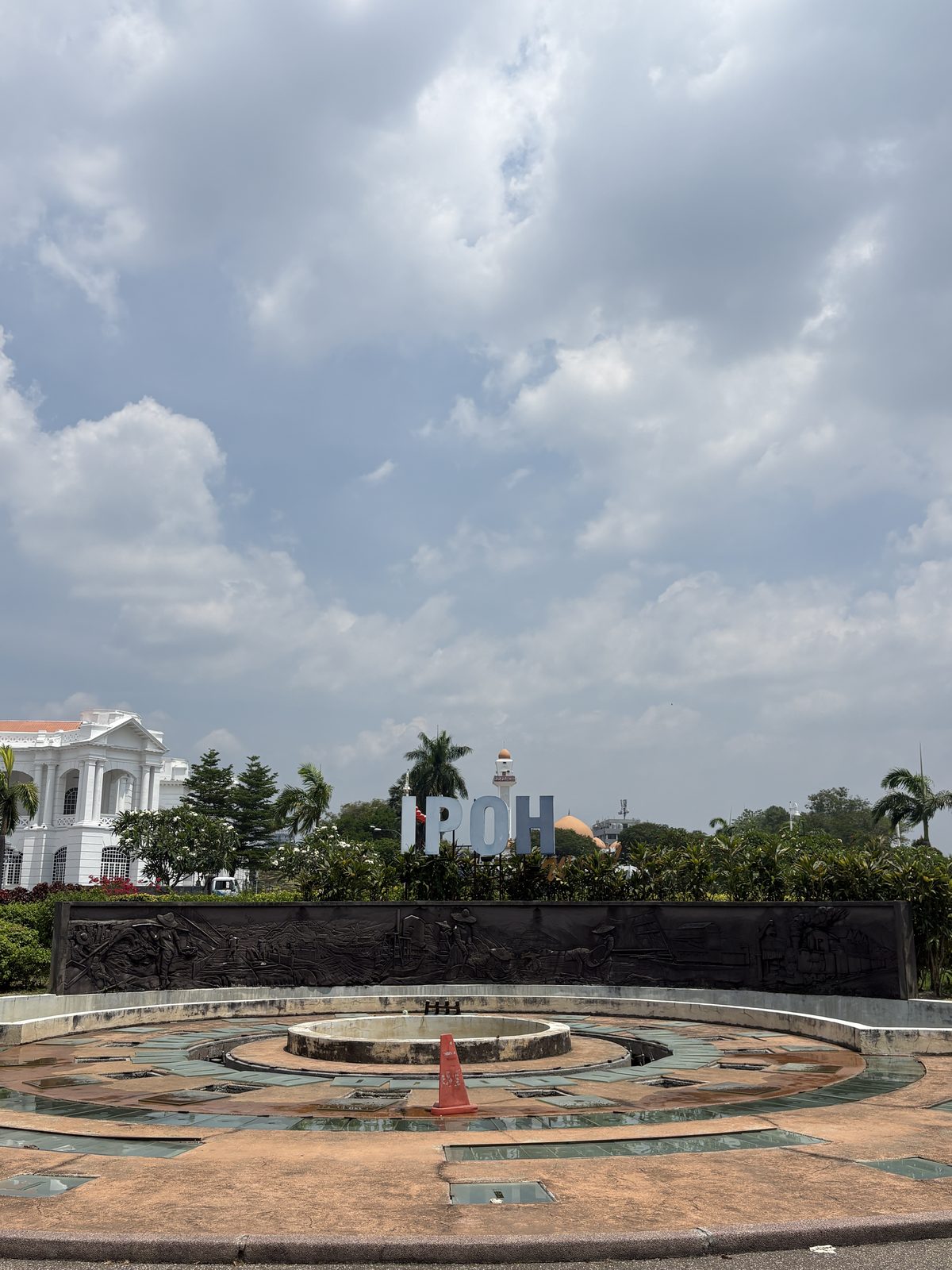
Ipoh
Penang Island to Ipoh
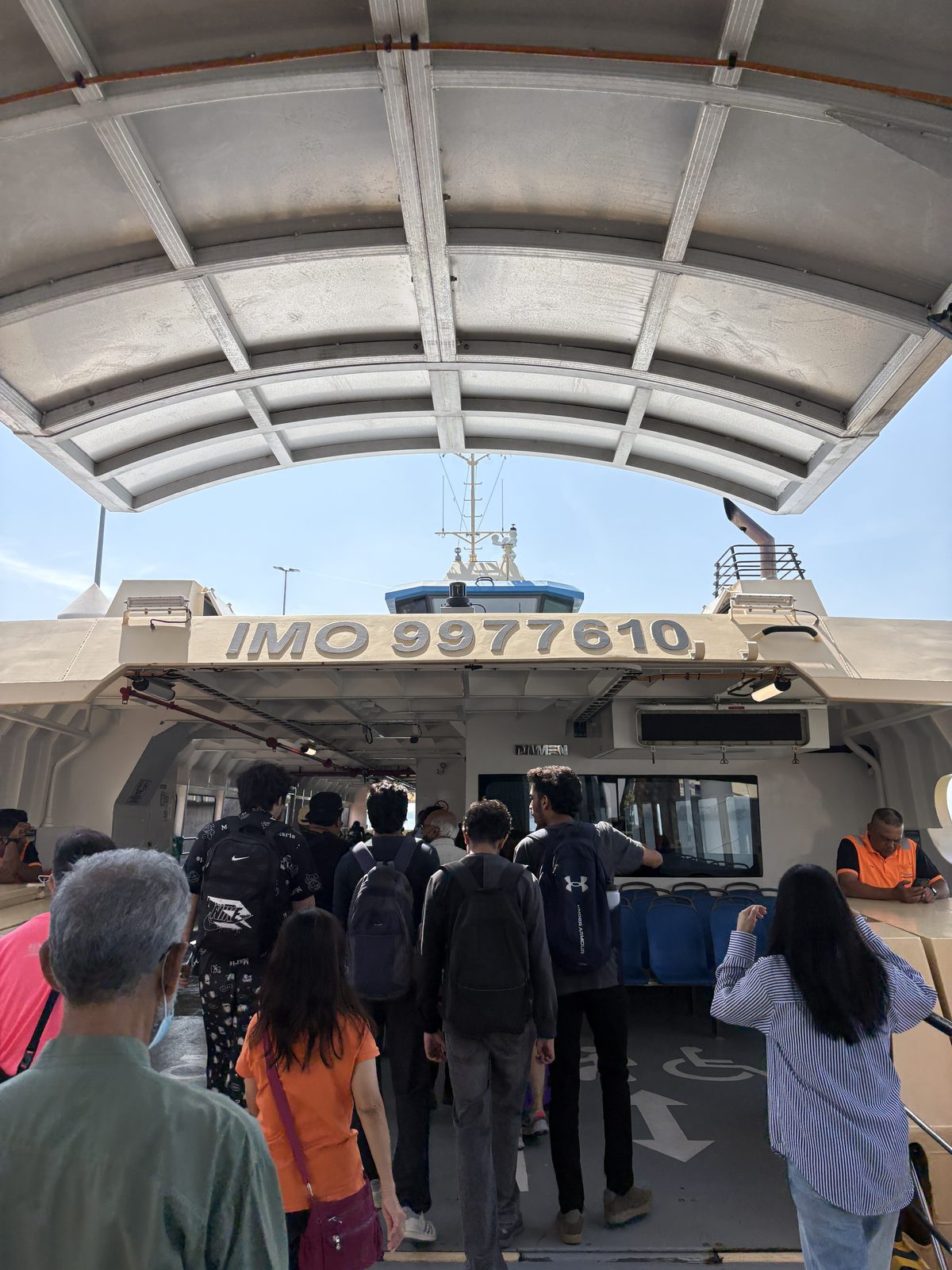
After staying on Penang Island for 3 nights, I moved to Ipoh. You can get to the mainland by bus or ferry, so I chose the ferry. I walked to the ferry port, and they seem to operate every 30 minutes, so I didn't wait too long. The ticket was just 2 MYR — very affordable.
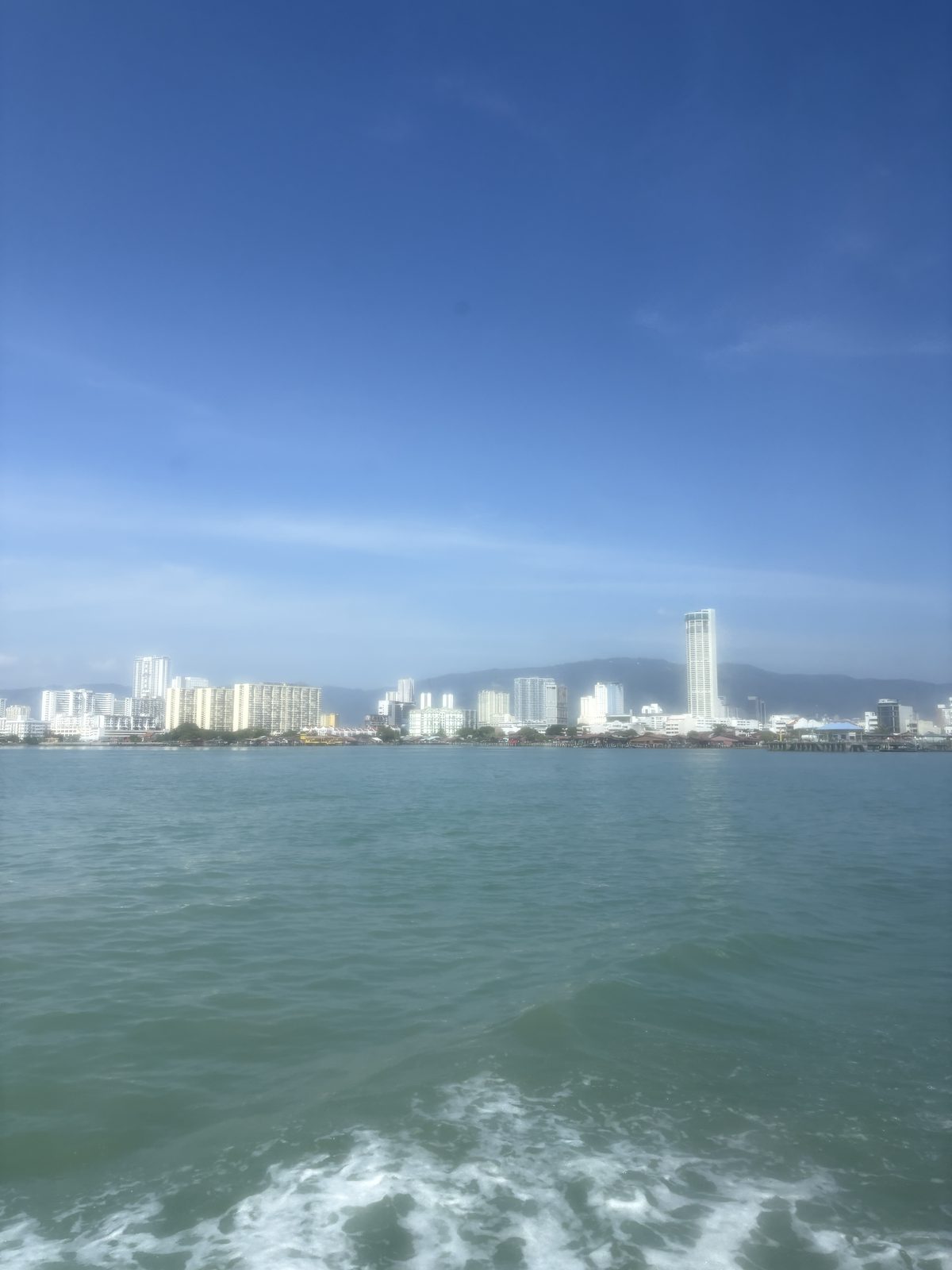
I'd read that it takes around 30 minutes to reach the mainland, but it was actually around 10 minutes — very close! The city on the mainland side is called Butterworth, and I headed straight to the station to catch a train.
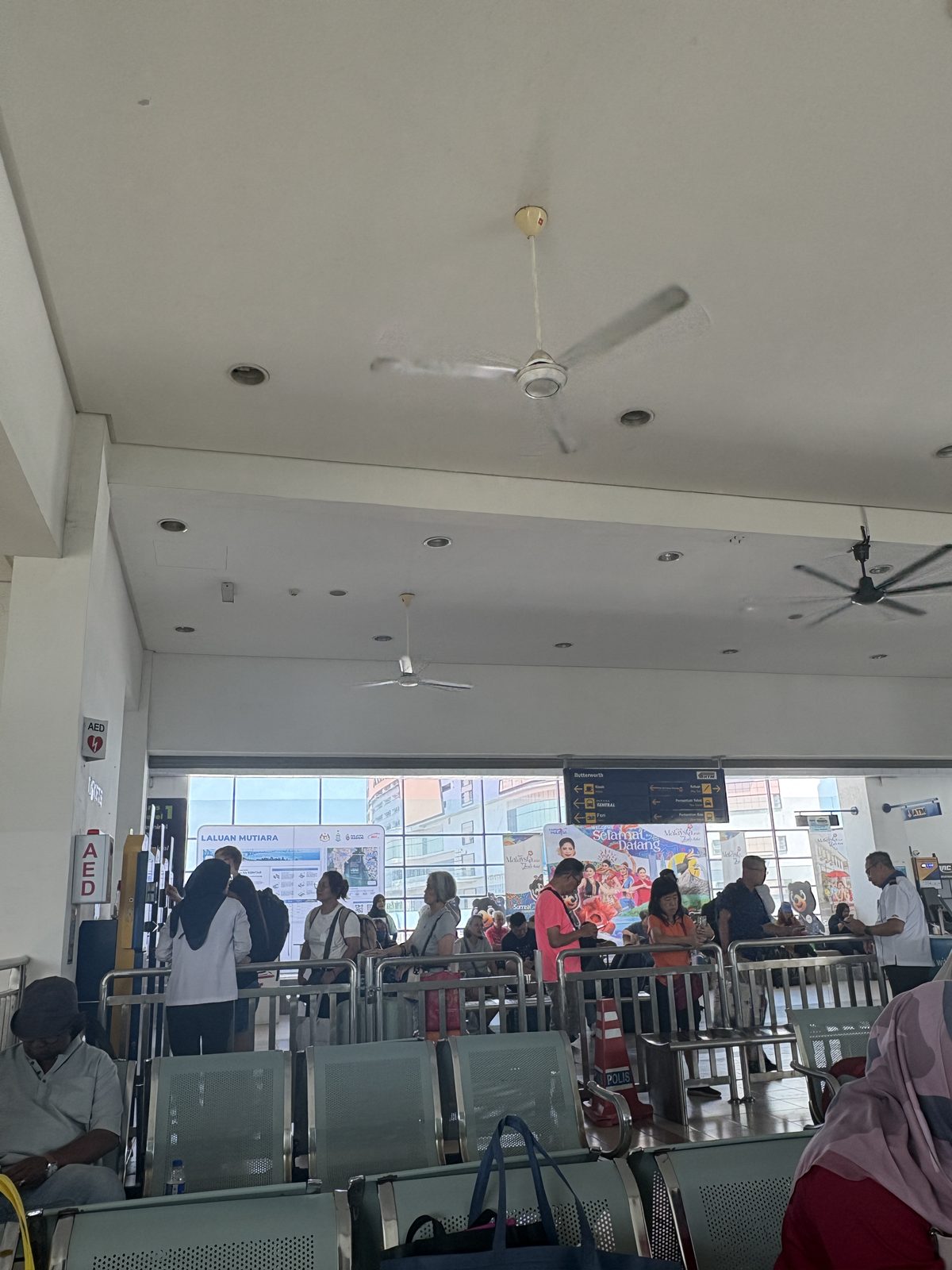
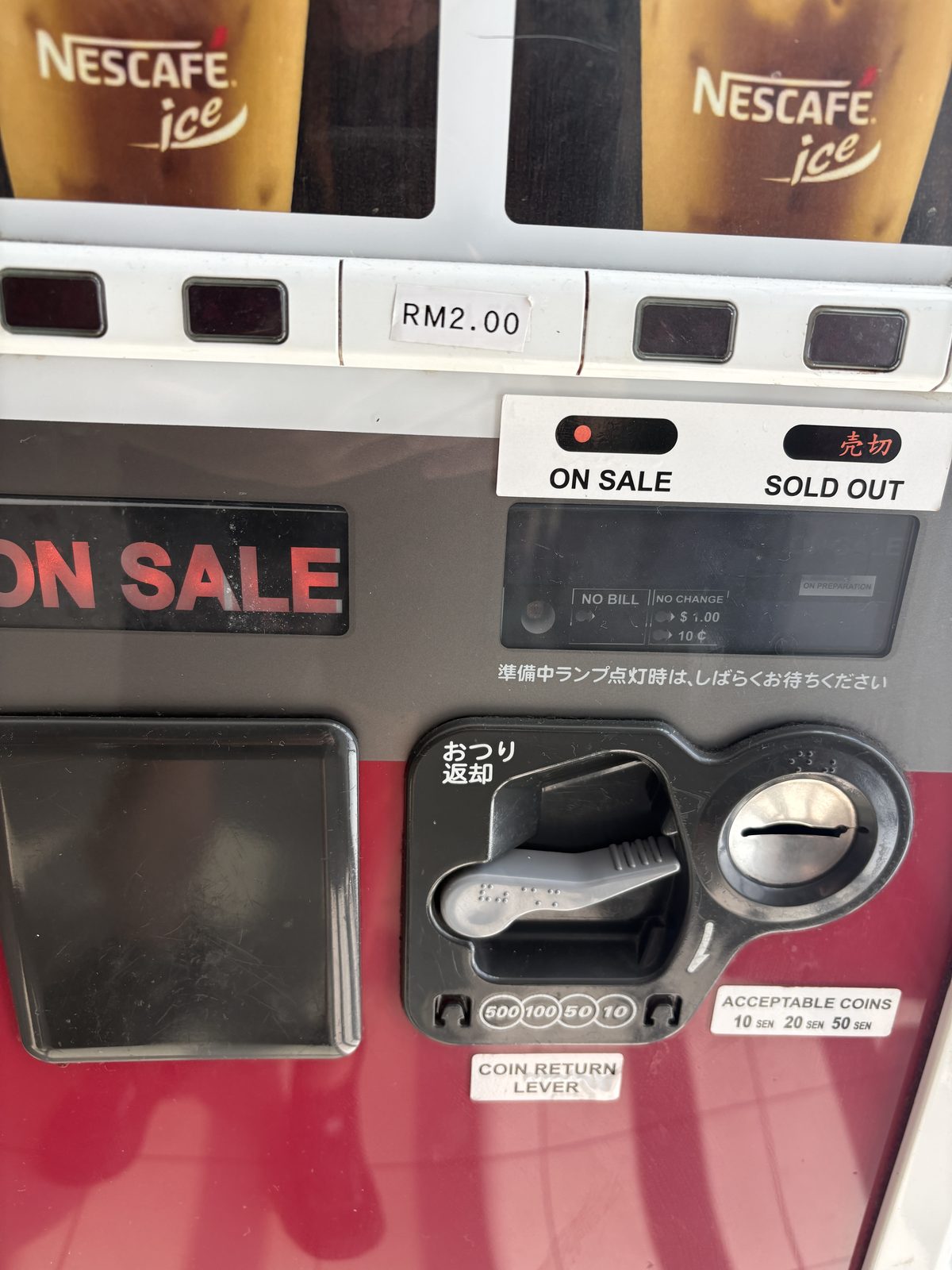
I found a vending machine at the station — it was from Japan! You see this type of vending machine in offices back home, and it seems they bought it second-hand. Unfortunately, the machine was broken...
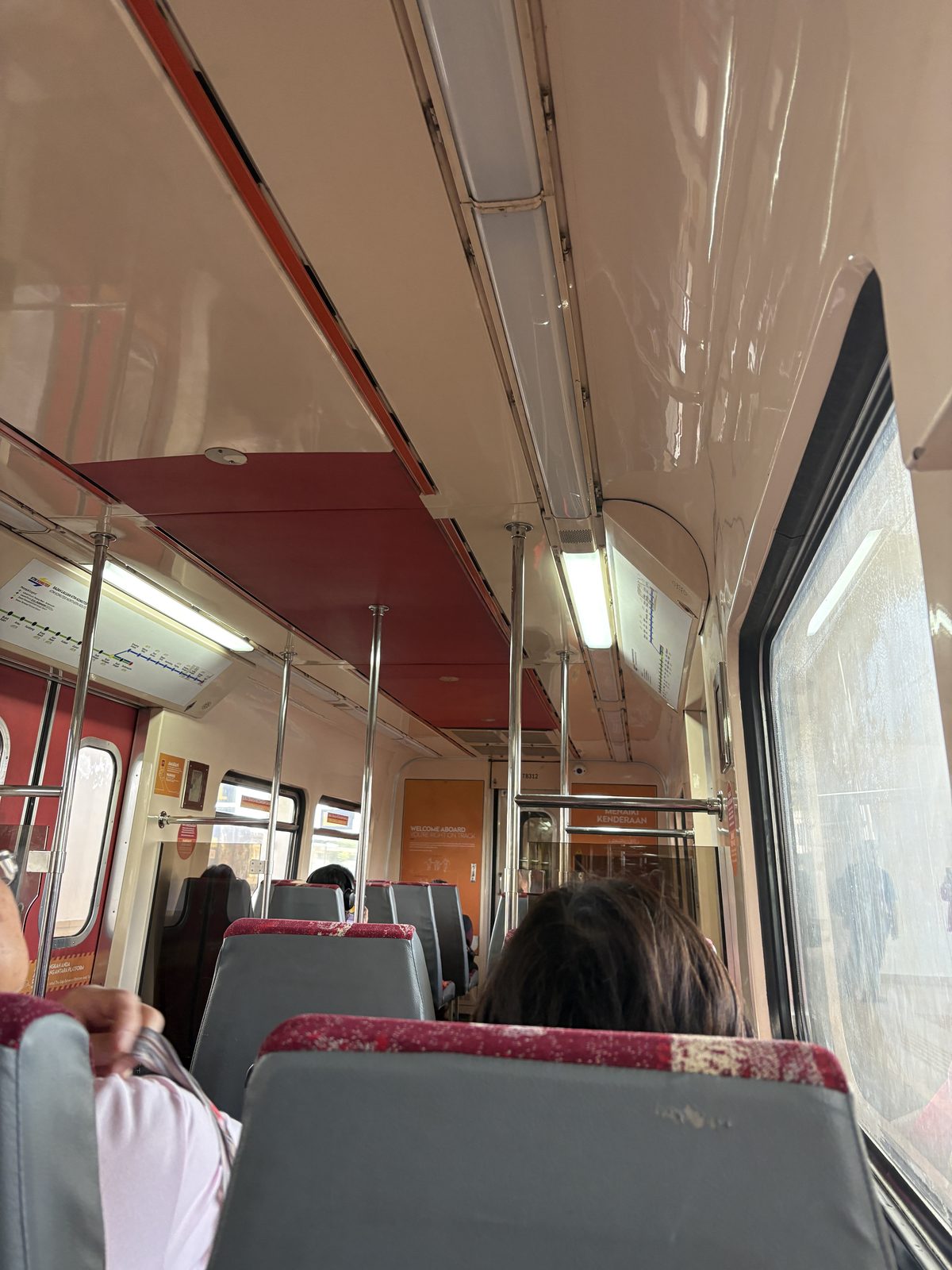
From Butterworth to Ipoh, there are two types of trains — ETS and KTM Komuter. ETS is the fastest train in Malaysia, and KTM Komuter is like a semi-express train. I chose KTM Komuter this time and bought a ticket with my credit card, which was very convenient. I expected the seats to be hard, but they weren't — the seats were comfortable and the train had AC. The trip to Ipoh took around 2 hours.
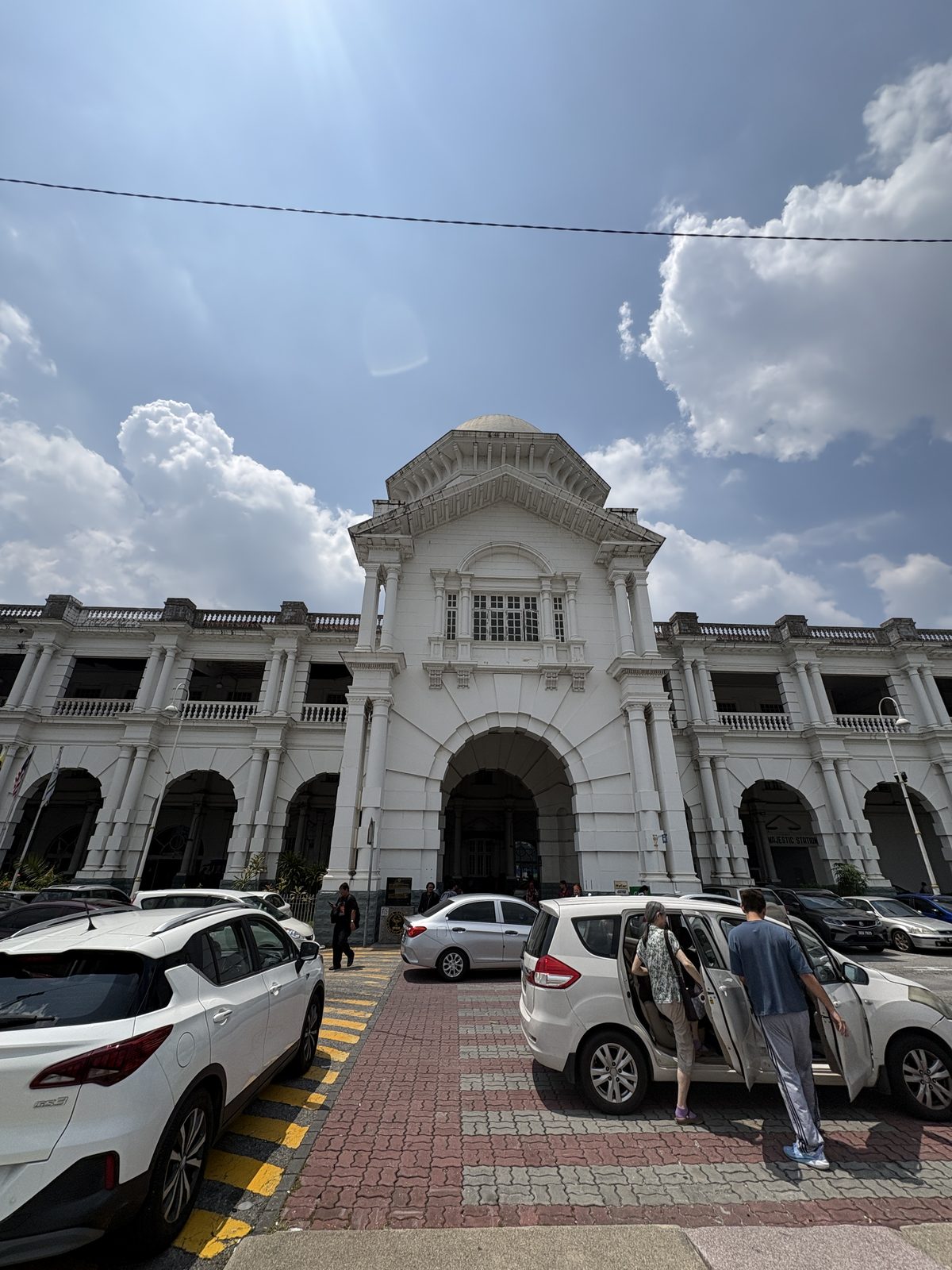
The train arrived at the station on time. The station is a beautiful white colonial building. Let's dive deeper into Ipoh in the next section.
Ipoh City
Ipoh is located between Penang and Kuala Lumpur, the capital of Malaysia, and is the third-largest city in the country. It boomed in the late 19th century as a tin mining hub, and you can still see many colonial-era buildings like Ipoh Station. The name "Ipoh" comes from the ipoh tree, which was once abundant in the area. It's a poisonous tree — interesting that the city was named after it.
Ipoh has an even stronger Chinese influence than Penang, as more than half of the population is Malaysian Chinese. There are many great Chinese restaurants serving dim sum, Hainanese chicken rice, and more.
It's also known as the "Food Capital" of Malaysia. They have lots of popular dishes and drinks, and I tried some of them during this stay.
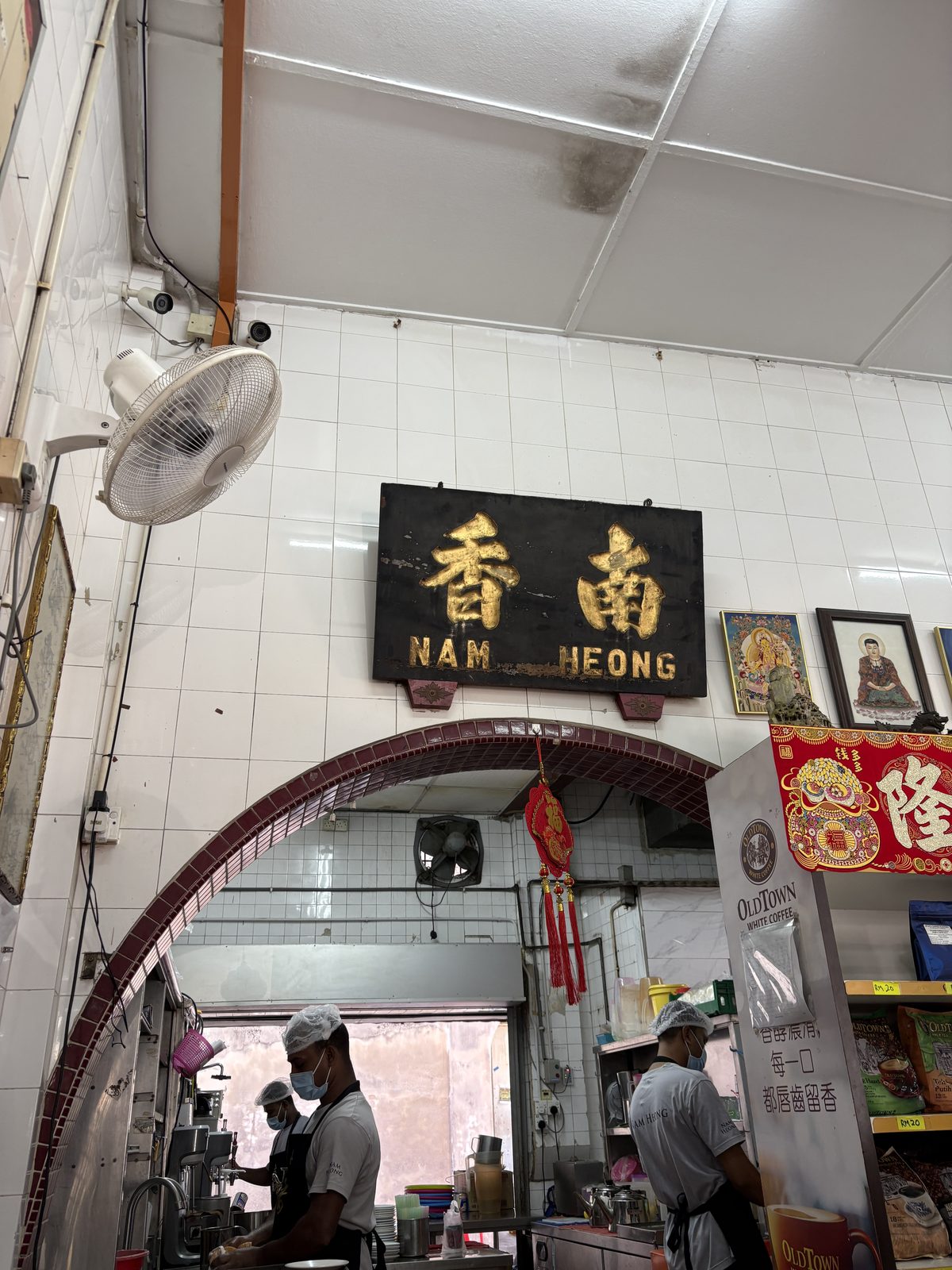
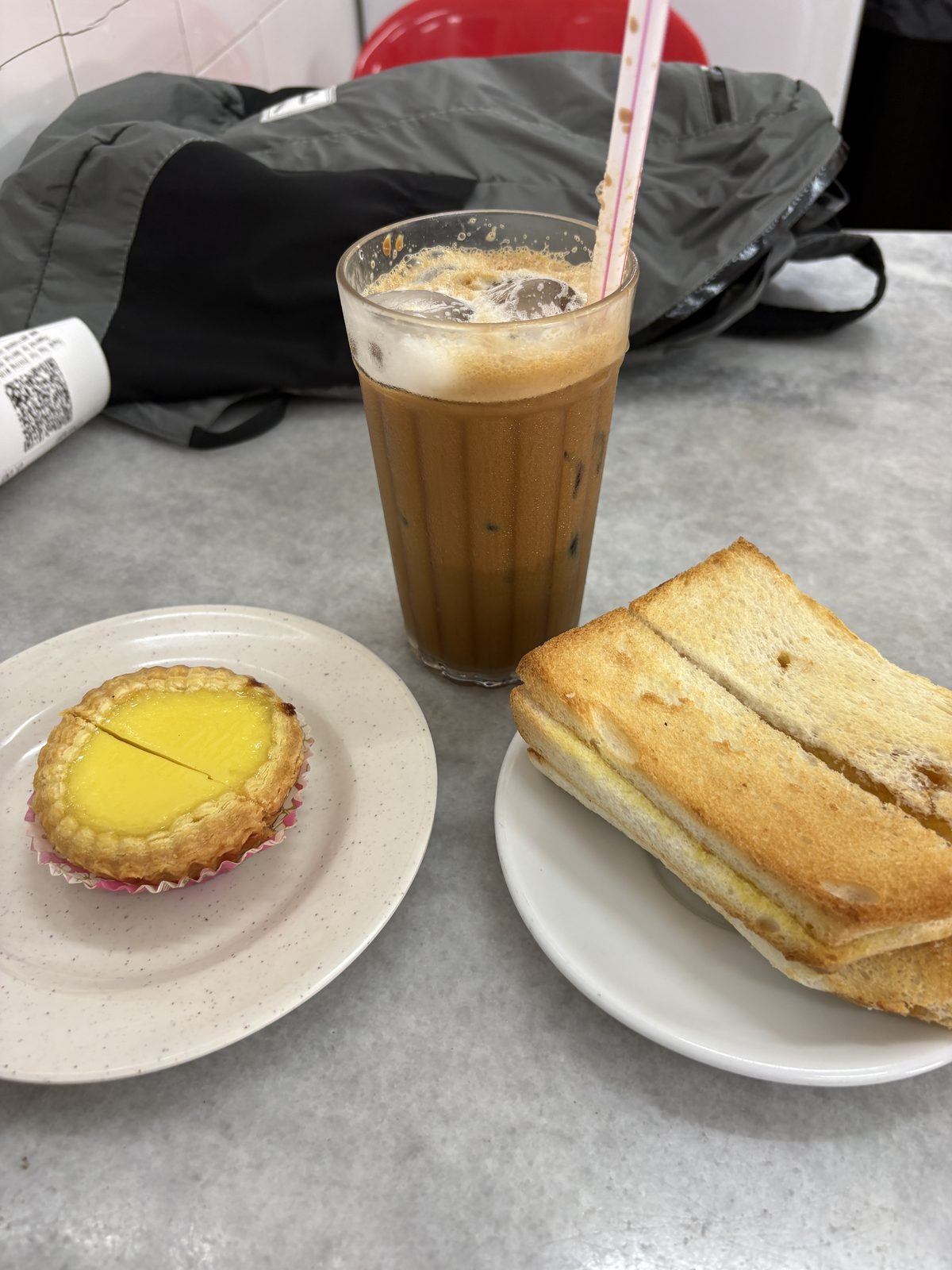
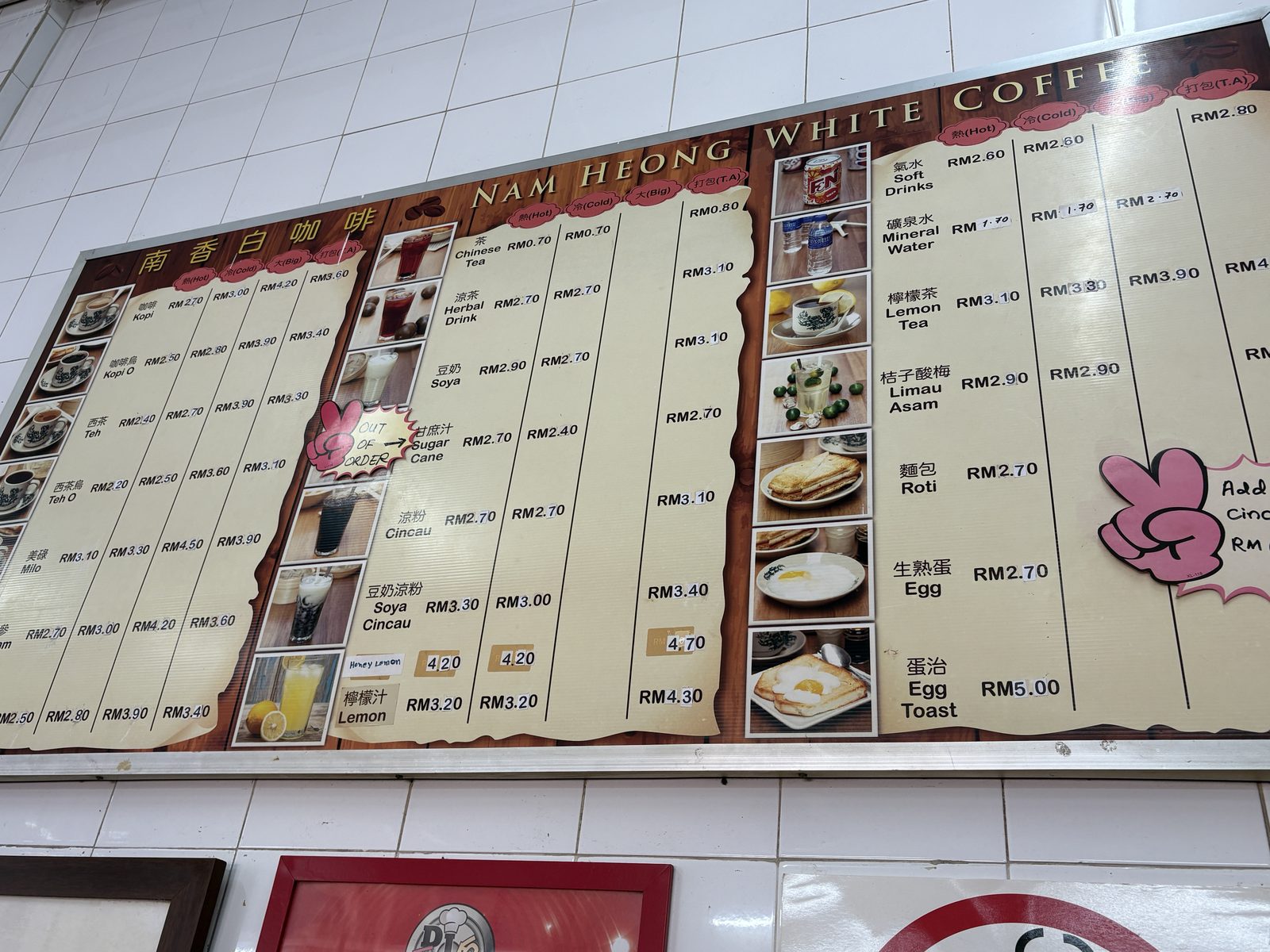
One of the signatures of Ipoh is White Coffee. I went to a famous cafe (Nam Heong Cafe) in the downtown area. Prices on Penang Island were a bit pricey, but here everything is much more affordable. I ordered white coffee, roti, and an egg tart — everything was delicious! I'm afraid I've been having so many sweet things in Malaysia, but it seems this is their style. The egg tart was especially amazing since it wasn't too sweet.
Tokong Gua Perak (ペラトン洞窟寺院)
Ipoh is also famous for its caves, especially those combined with temples. It reminds me of Ninh Binh.
Ipoh is surrounded by karst limestone — ancient seabed pushed above water millions of years ago. Rainwater slowly dissolved the soft rock over time, creating the caves and dramatic cliffs you see today.
Same geology as Ha Long Bay and Guilin. The caves became temples, and the mineral-rich limestone water is said to be why Ipoh's bean sprouts are so good.
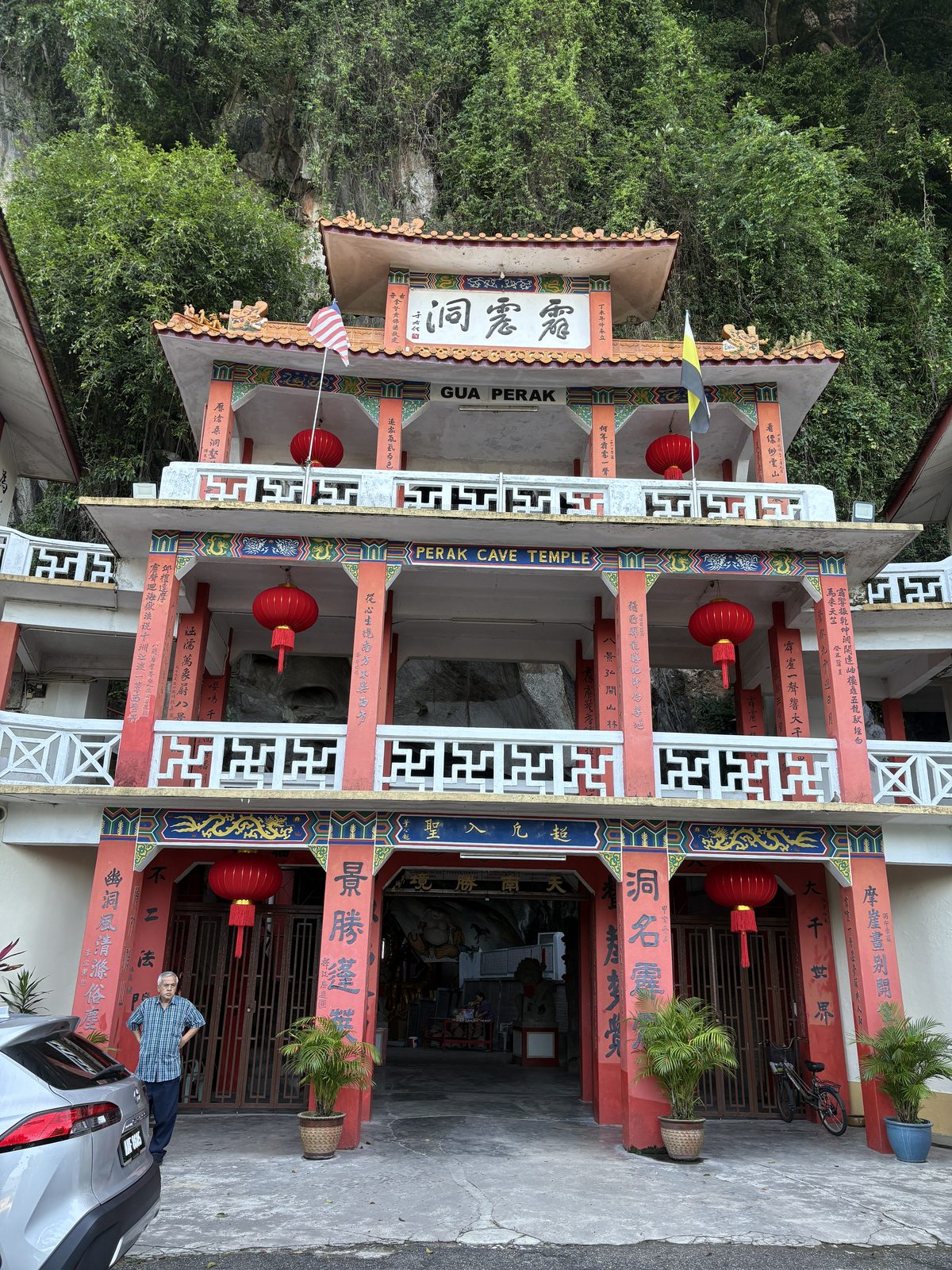
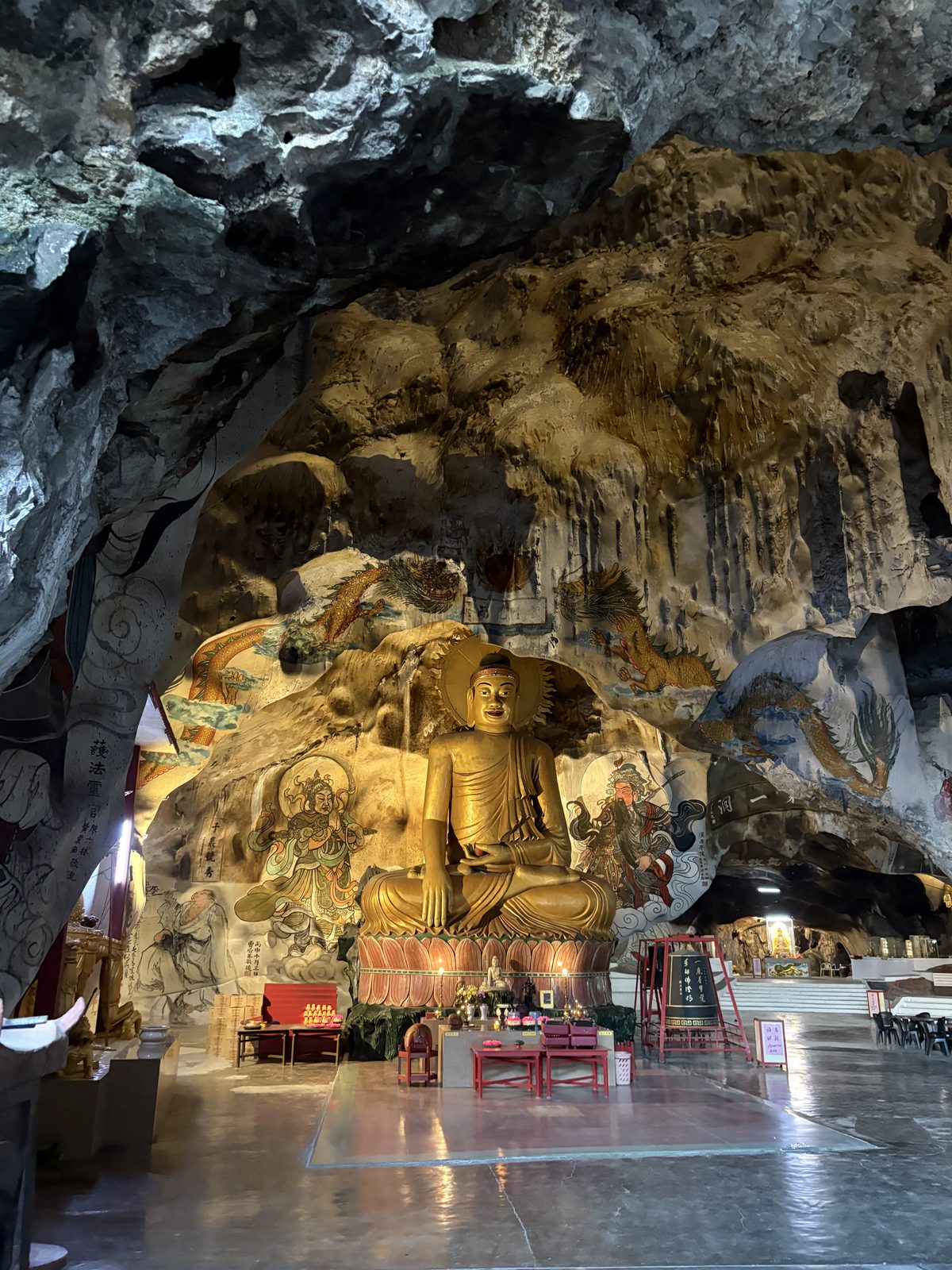
I visited one of the most famous temples in Ipoh — Tokong Gua Perak (ペラトン洞窟寺院). It doesn't look large from the outside, but it's actually enormous inside. There are more than 20–30 statues, and it's a bit cooler than outside.
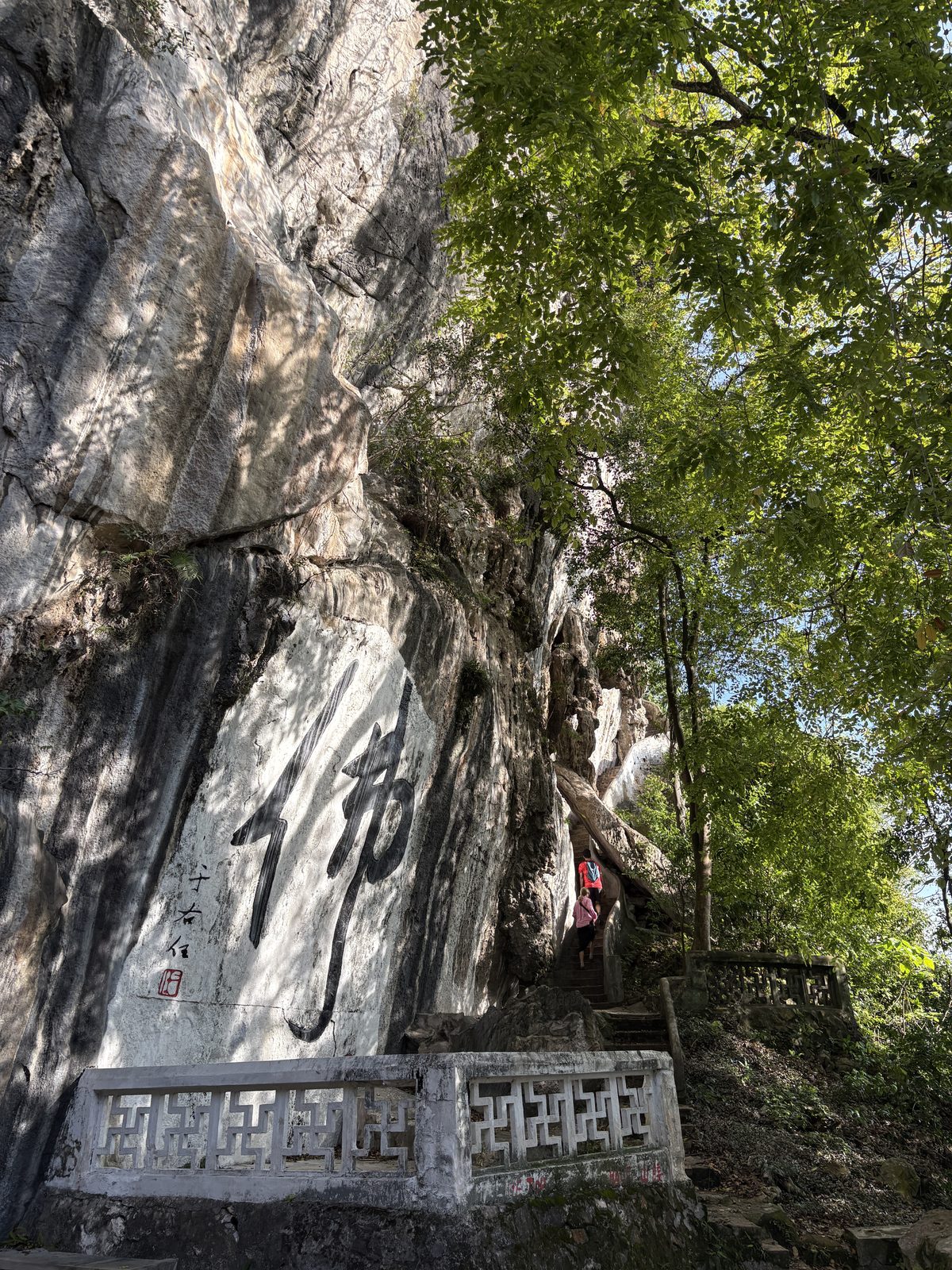
Perak Cave Temple (霹靂洞) is one of Malaysia's largest cave temples, about 5km north of Ipoh. A Buddhist monk discovered the natural limestone cave in 1926 and turned it into a temple, featuring a 12-meter standing Buddha and walls covered in Chinese calligraphy.
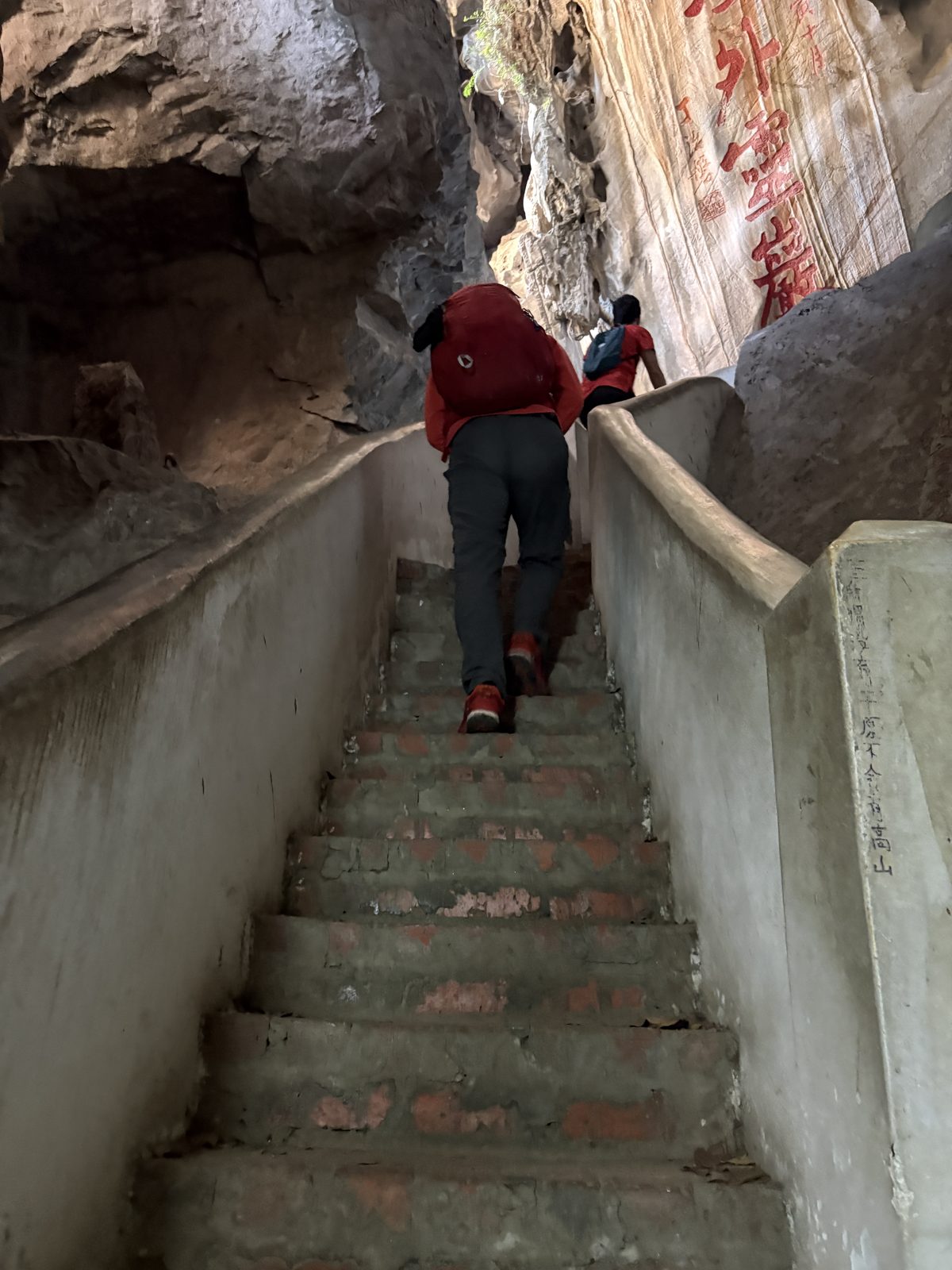
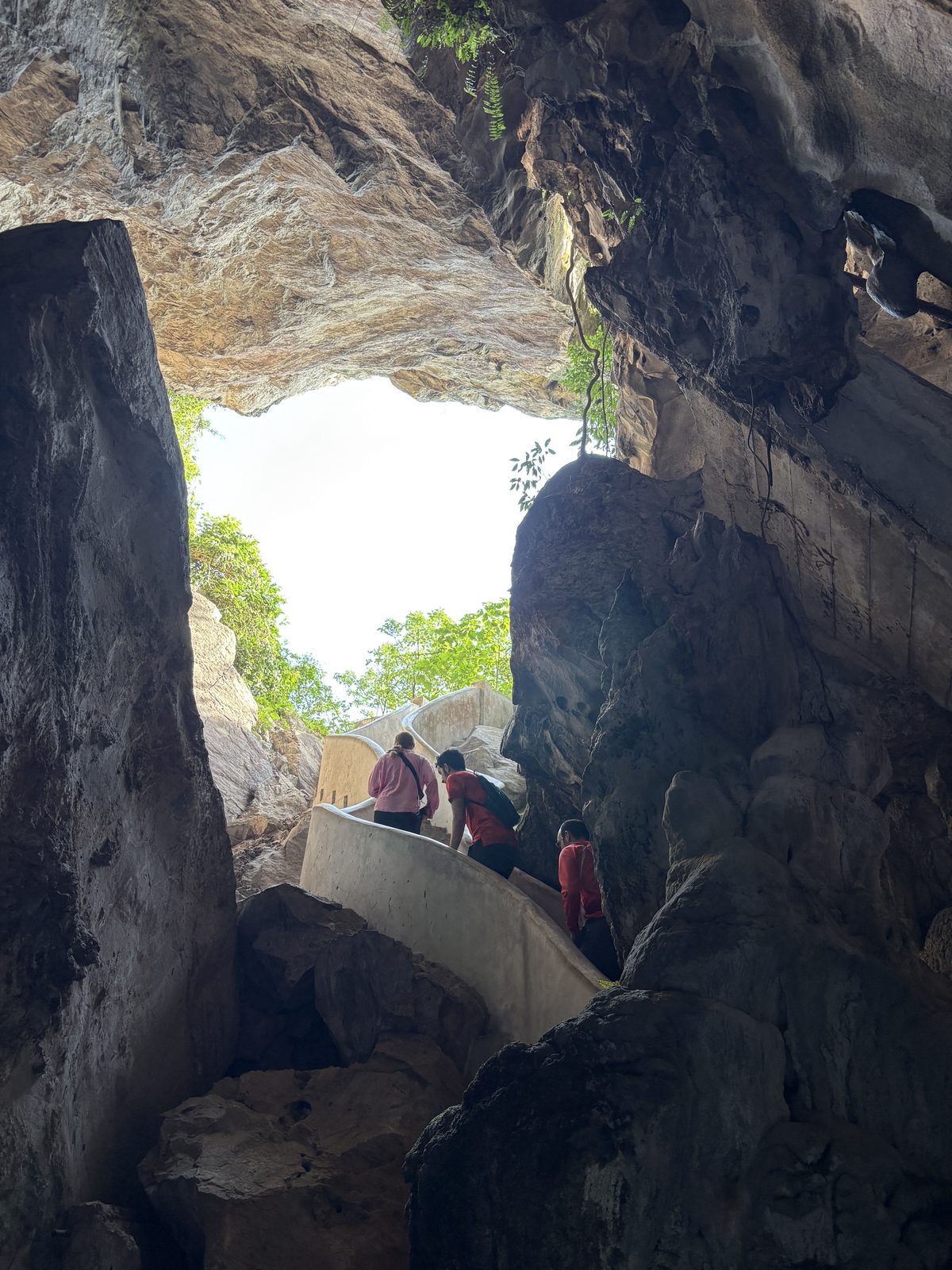
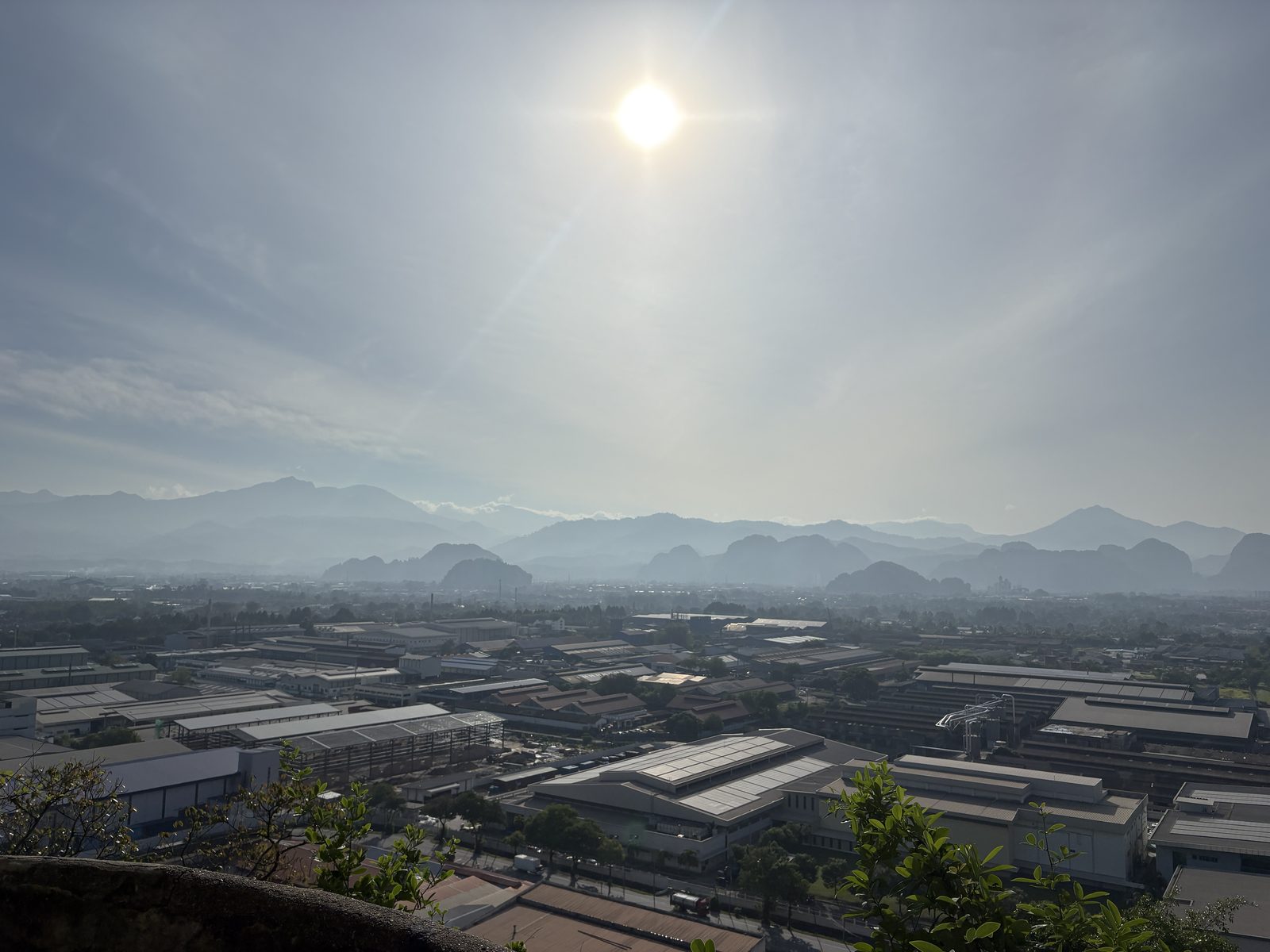
It has two levels — the lower cave serves as the main worship hall, while the upper cave rewards a 450-step climb with panoramic views over Ipoh's limestone hills and palm oil plantations.
You can also climb to the top via stairs from inside, so I gave it a try. It was much longer and harder than expected, but the panoramic view of Ipoh from the top was amazing. I recommend going in the morning because it gets crazy hot in the afternoon!
I only stayed two nights in Ipoh, but I had lots of great food and could really feel the local culture.
I'm writing this article on the train, and the next destination is Kuala Lumpur — the biggest city in Malaysia.
Comments
Loading...