Tbilisi & Kazbegi
Tbilisi & Kazbegi
Tbilisi
After leaving Kazakhstan, I moved on to Georgia, which is located in the Caucasus region. I arrived at the airport at 9 pm and headed to my hostel using the Yandex rideshare app. I'd been told check-in closed at 11 pm, so I was glad my flight wasn't delayed and passport control went very smoothly.
Georgia is known among Japanese travelers as a popular nomad destination because we can stay for up to a year visa-free. In fact, I came across more Japanese working here than I had in Turkey or any of the Central Asian countries.
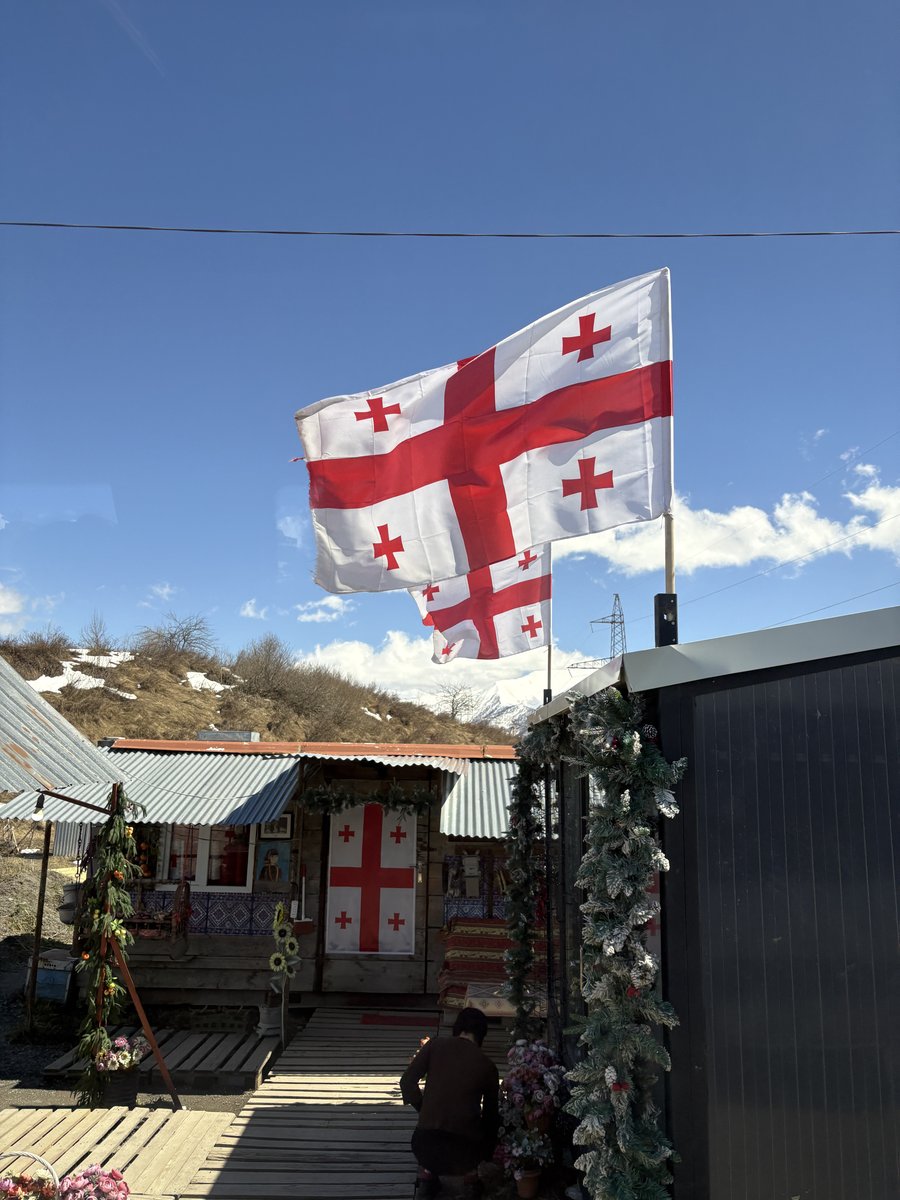
Tbilisi is the capital of Georgia, and I stayed here for five days. The atmosphere felt different from both Turkey and Central Asia, and the biggest difference, I realized, is that Georgia is a Christian country, following its own Georgian Orthodox tradition.
The Georgian Orthodox Church is one of the oldest Christian institutions in the world, dating back to 326 AD when Georgia adopted Christianity as its state religion — the second country ever to do so, just after Armenia. Tradition credits its founding to Saint Nino, a 4th-century Cappadocian woman who converted the Iberian king Mirian III using a cross of grapevine branches tied with her own hair; that distinctive drooping cross remains the church's emblem to this day. Autocephalous since the 5th century, with only a brief interruption under Russian control during the Tsarist era, it is led today by the Catholicos-Patriarch of All Georgia from Tbilisi's Sameba Cathedral and counts roughly 84% of the population as adherents. Its architecture — modest stone churches crowned with conical drum-domes, often perched on dramatic cliffs or hilltops like Jvari and Gergeti Trinity — is inseparable from the Georgian landscape and national identity.
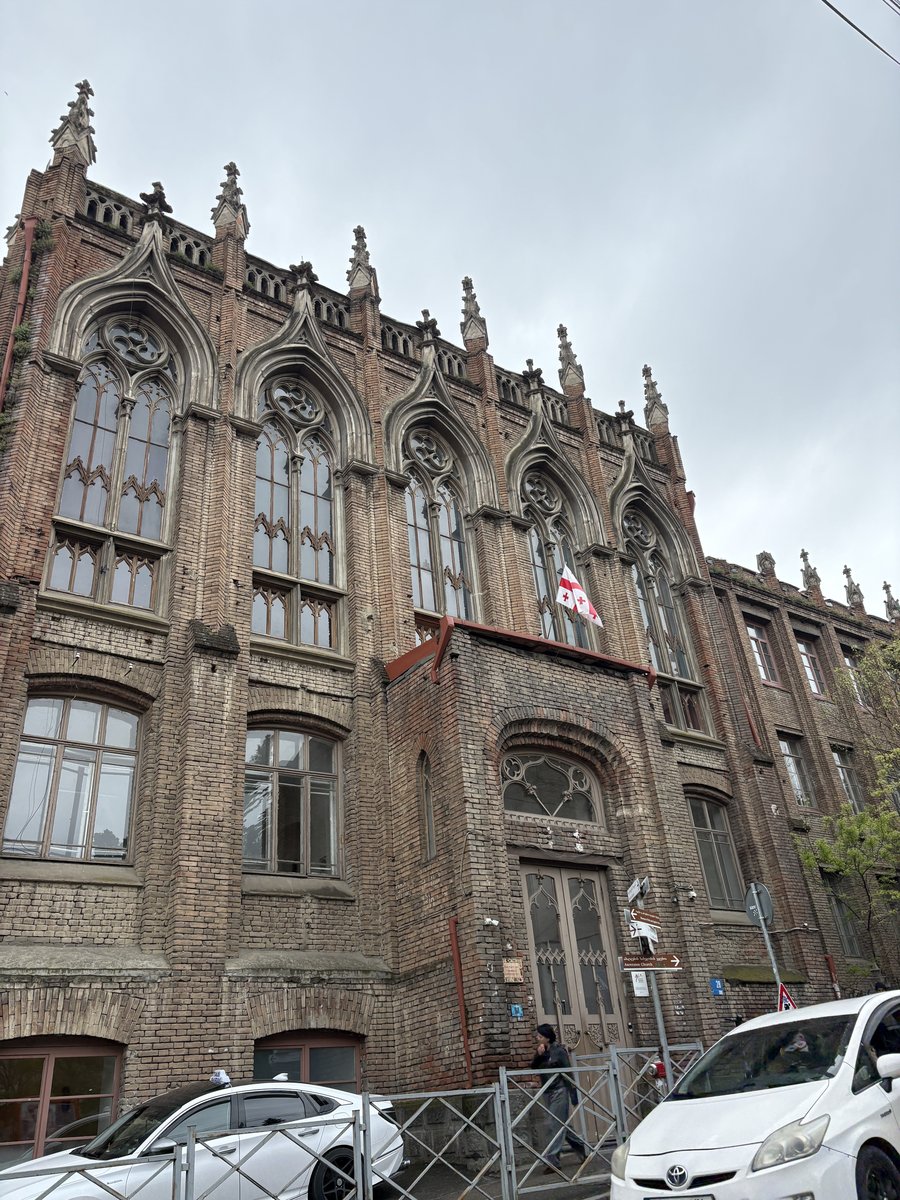
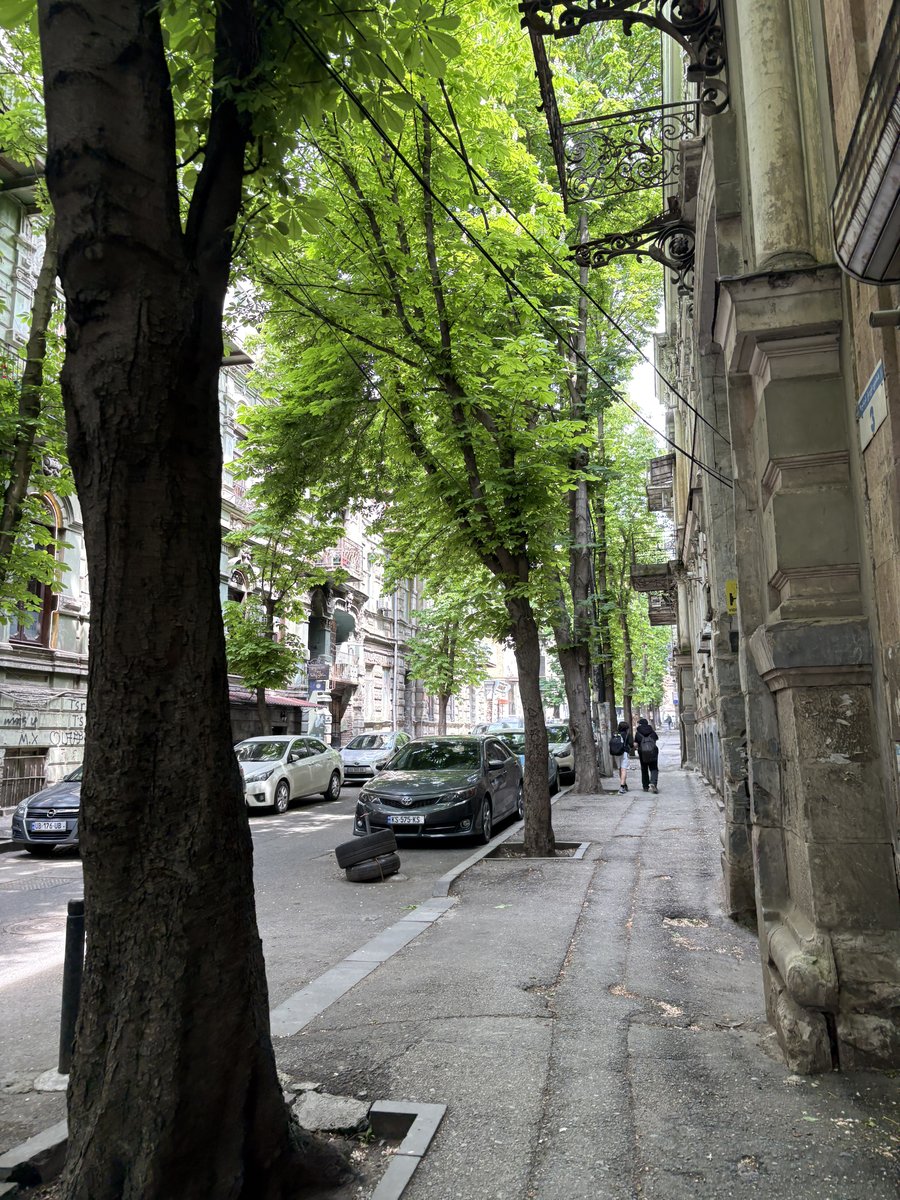
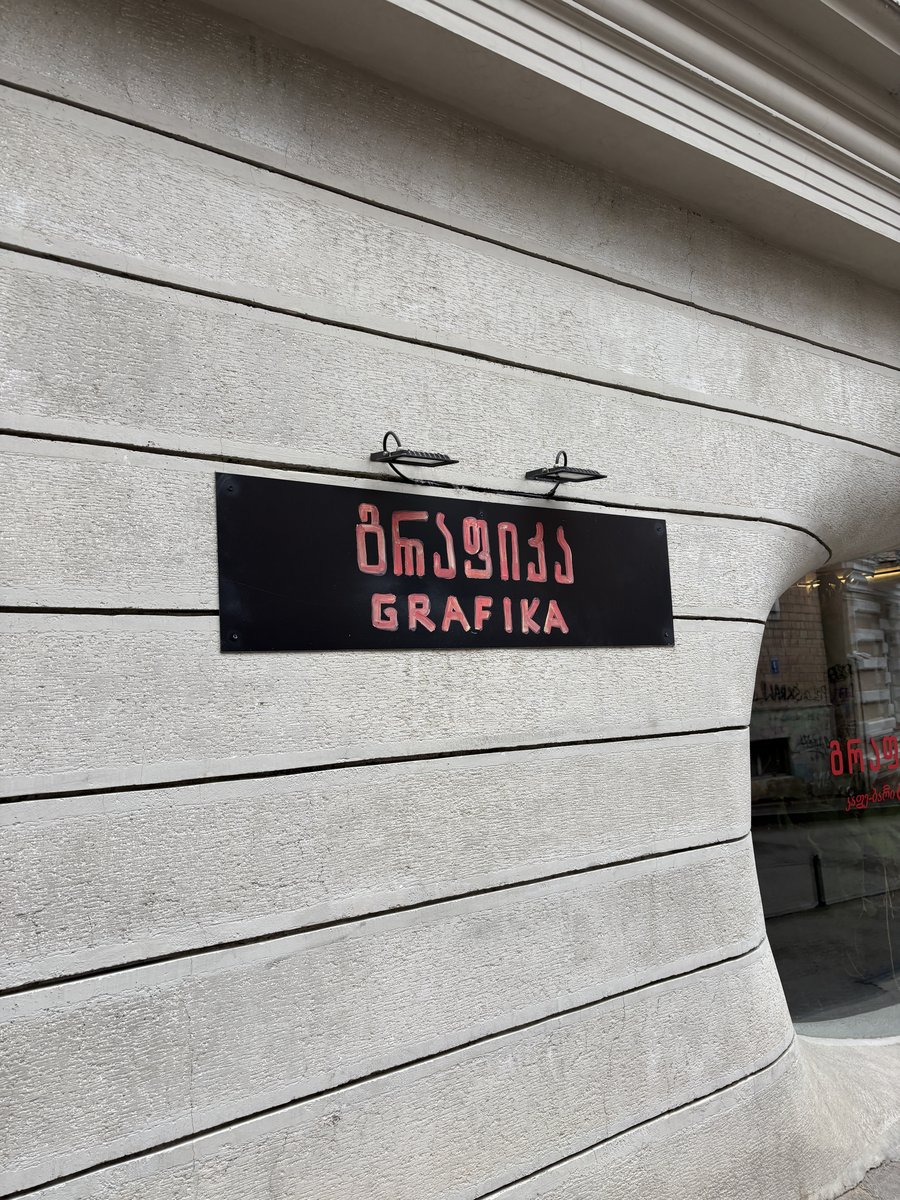
Another thing that fascinated me was the language. The script is very unique, and I later learned that Georgian doesn't belong to any of the major language families like English or Russian — it stands on its own as an independent language, much like Japanese.
Georgian Food
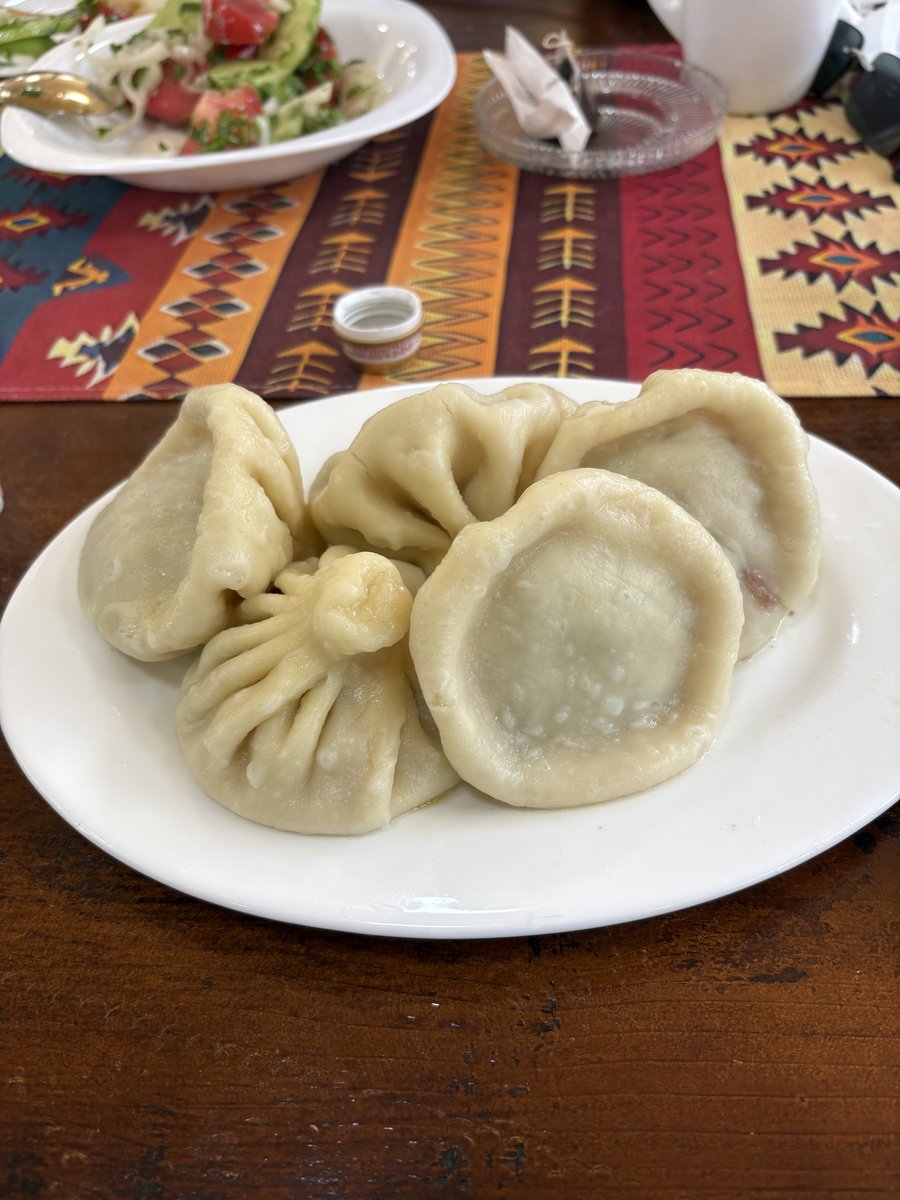
Georgia has many distinctive dishes, and dumplings, bread, and wine in particular are popular, each with countless variations. Khinkali is the local dumpling, and I ended up having it several times on this trip. Every restaurant uses its own dough, and there are many fillings to choose from — mostly beef, pork, or cheese. Georgia is also known as the birthplace of wine, and you can enjoy good local wines pretty much everywhere at reasonable prices. That said, Georgian food was a bit too salty for me, and I wondered if that might be one reason the average lifespan here is relatively short.
Ananuri Church & Gudauri
On another day, I joined a one-day tour from Tbilisi out to Ananuri, Gudauri, and Kazbegi.
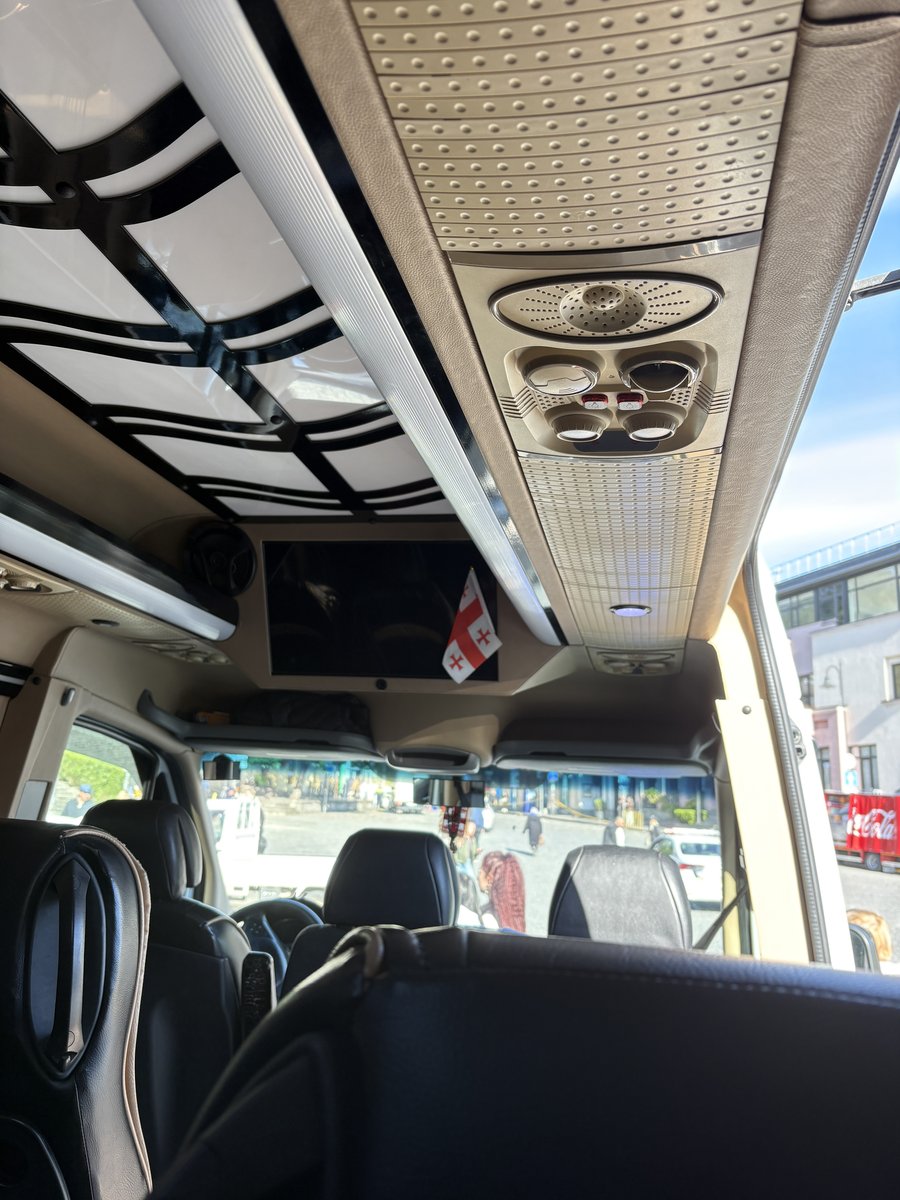
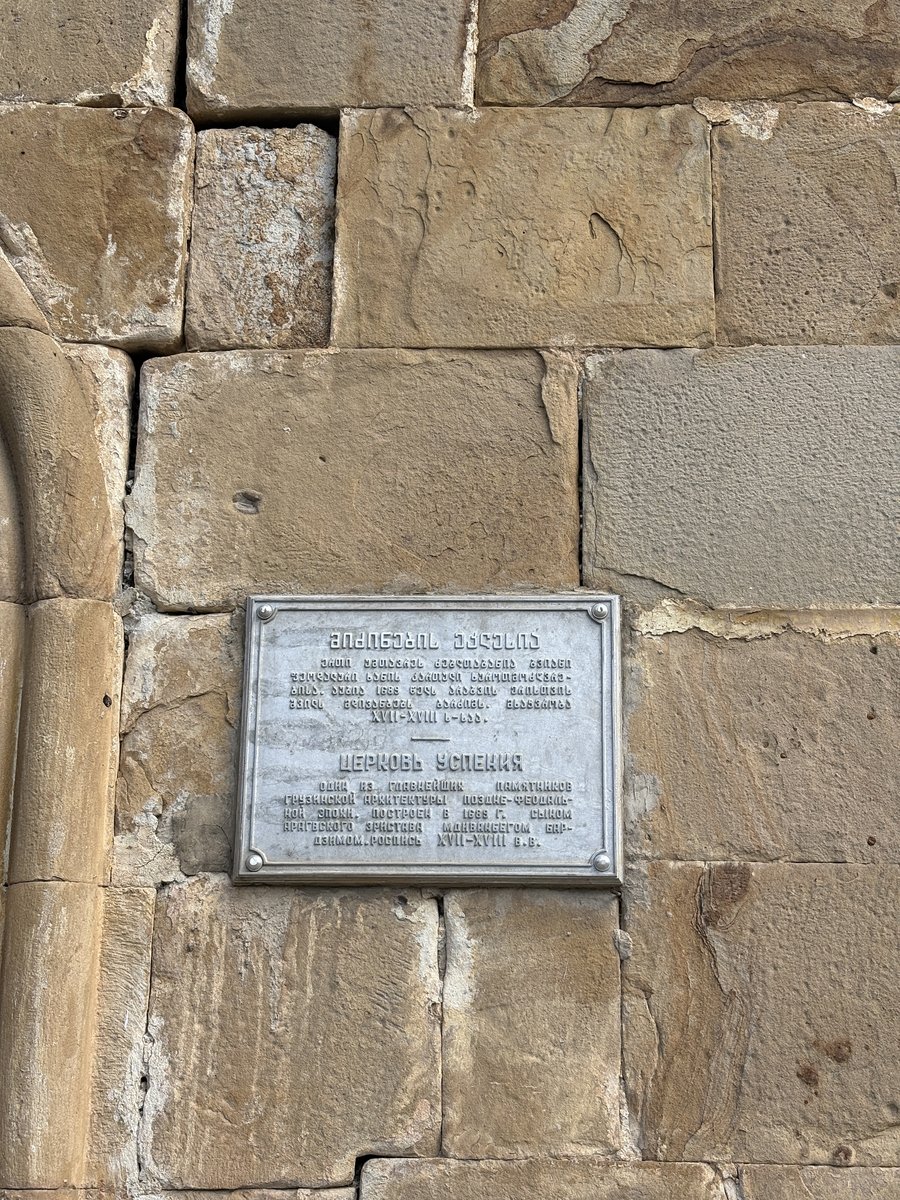
Our first stop was Ananuri Church, about 50 km from Tbilisi. I couldn't take pictures inside, but the icons in Georgian churches looked different from those I'd seen in other countries. The place felt frozen in time, and the atmosphere was profoundly solemn.
Ananuri is a 13th-century fortress complex perched above the turquoise waters of the Zhinvali Reservoir, about 70 km north of Tbilisi along the Georgian Military Highway. For centuries it served as the seat of the Eristavi dukes of Aragvi, who controlled this strategic stretch of the road into the Caucasus and feuded constantly with neighboring lords — a rivalry that culminated in 1739 when Shanshe of Ksani stormed and burned the castle. At its heart stands the Church of the Mother of God (Ghvtaeba), completed in 1689, whose warm sandstone façade is famed for an intricately carved grapevine cross and a relief of two angels flanking the Tree of Life. Today, Ananuri is one of the most photographed monuments in Georgia and a near-obligatory stop on the road up to Kazbegi.
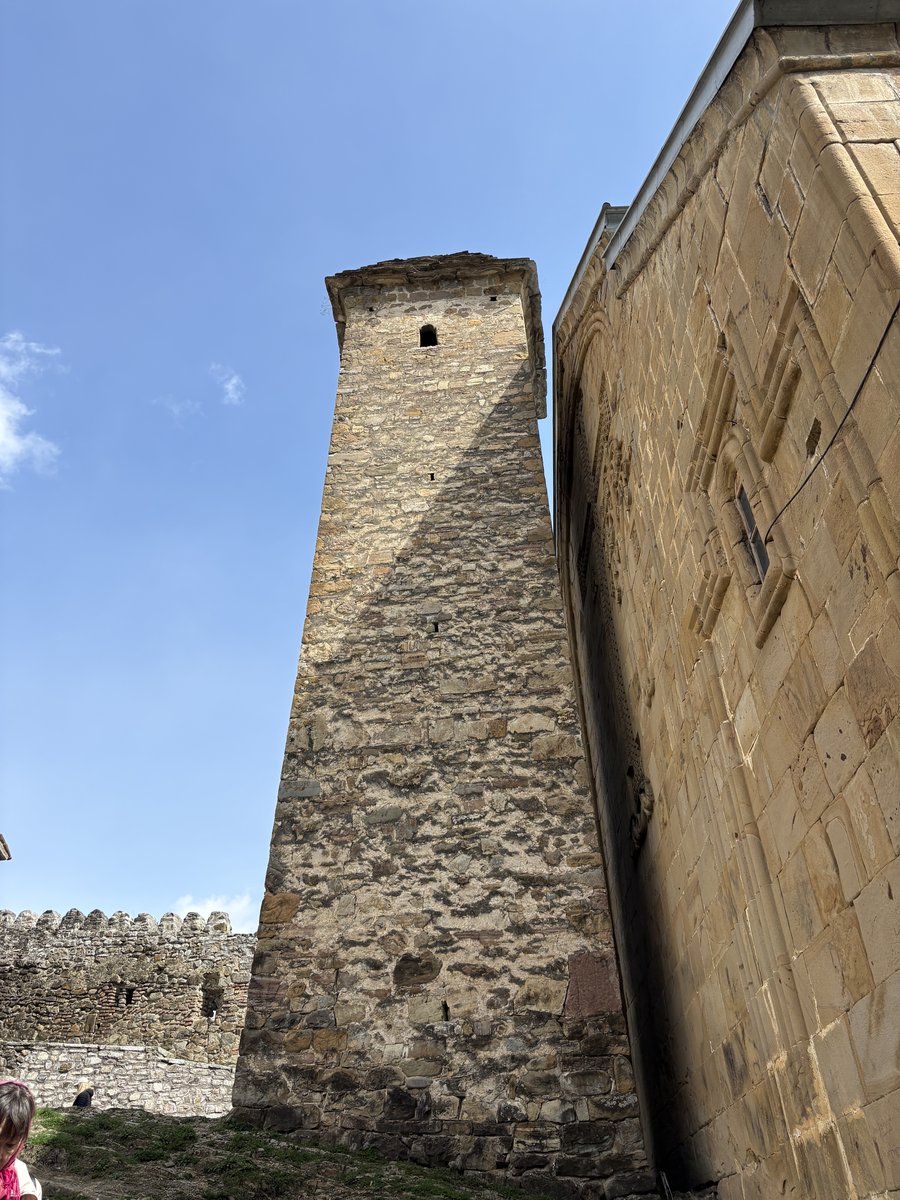
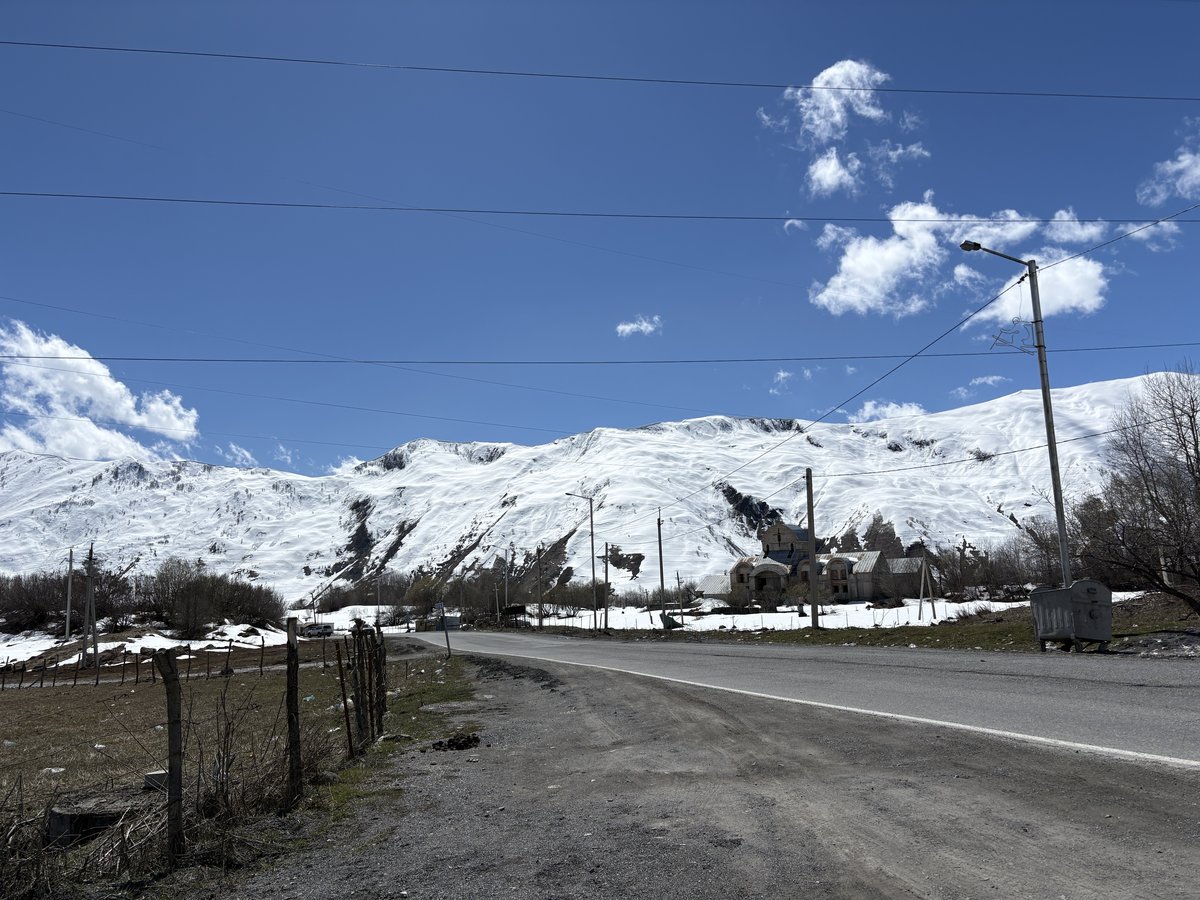
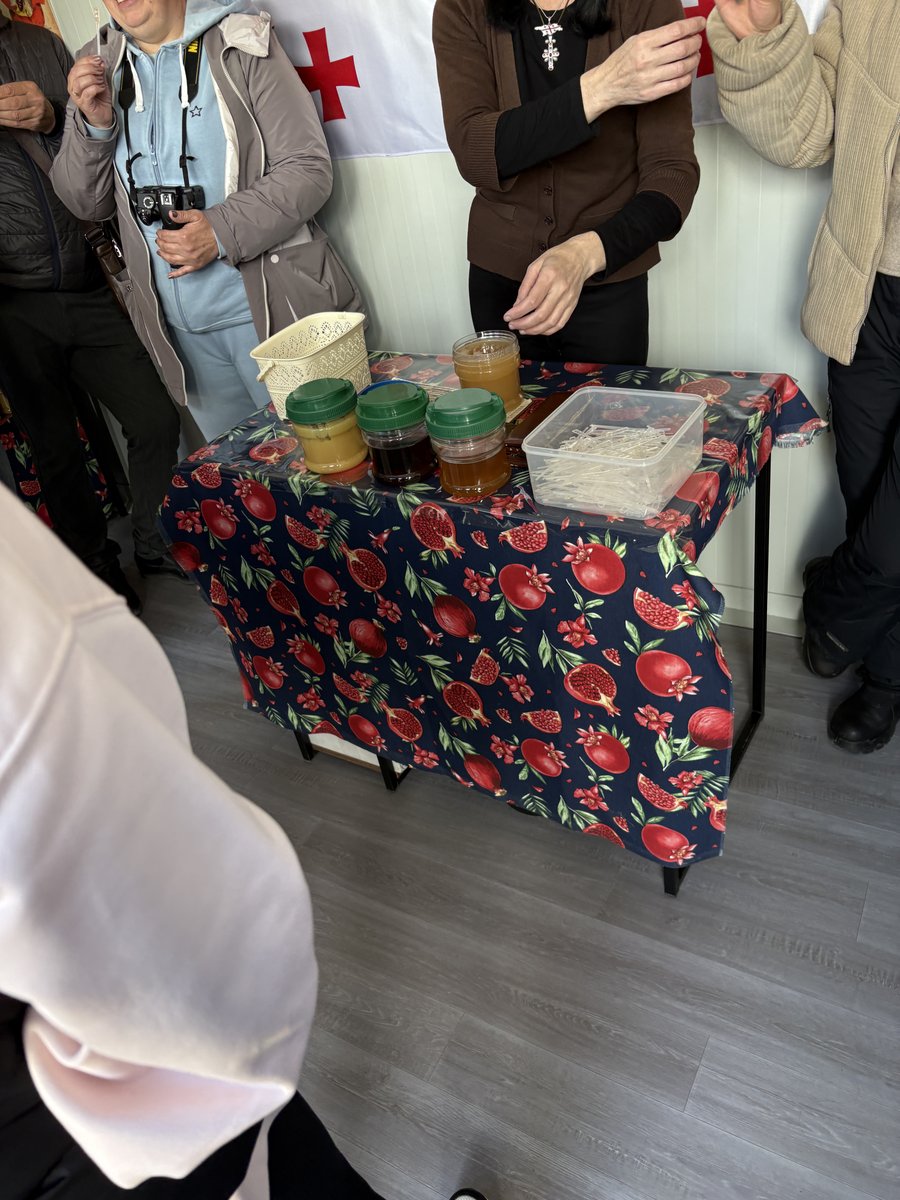
After Ananuri, we drove on to Gudauri, which sits between Ananuri and Kazbegi. Gudauri is a popular ski resort in winter, and even though we'd only driven about two hours from Tbilisi, the mountains here were still covered in snow and it was very cold. We also stopped at a local honey shop and tasted several different Georgian honeys.
Kazbegi
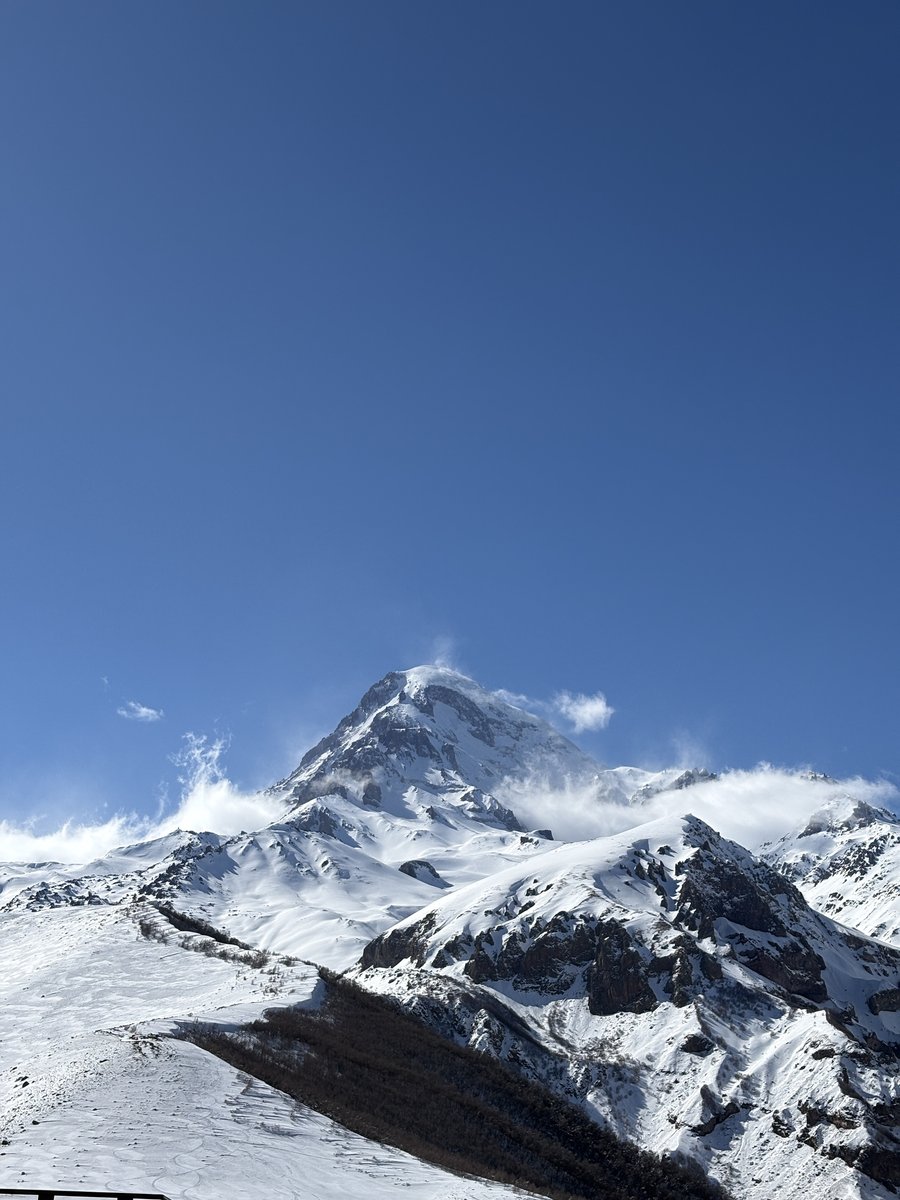
Our final destination was Kazbegi, a town close to the Russian border with the towering Mount Kazbegi as its icon. The road from Gudauri to Kazbegi cuts entirely through the mountains and was genuinely thrilling. Luckily it was sunny, and we could clearly see the summit of Mount Kazbegi.
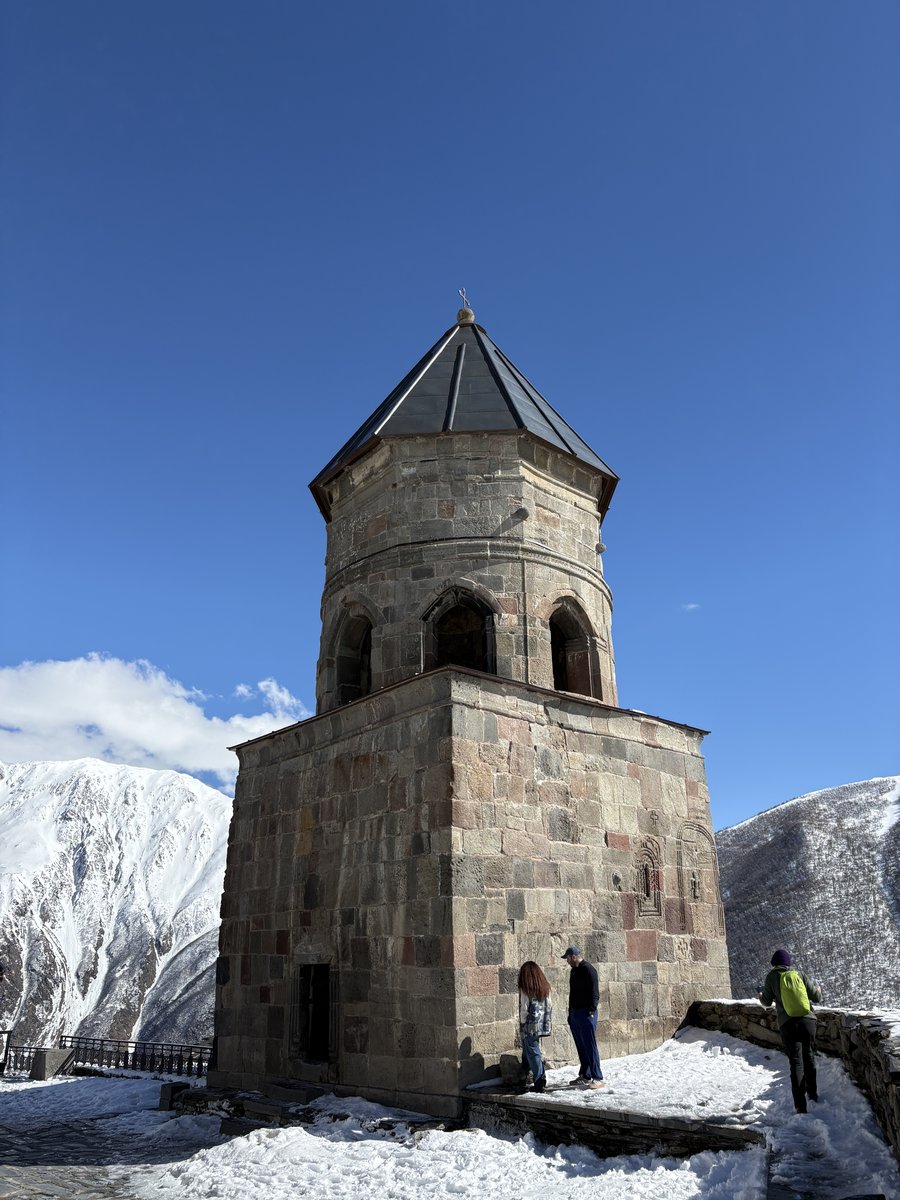
There is also a famous old church here, the Gergeti Trinity Church. It's known as the "church closest to heaven," sitting at nearly 2,000 meters above sea level, and the place felt deeply mystical. The interior was incredibly beautiful, filled with ancient icons.
Gergeti Trinity Church (Tsminda Sameba) is a 14th-century stone church standing alone at 2,170 meters in the Caucasus, directly beneath the snow-capped peak of Mount Kazbek. Built in the highland region of Khevi above the village of Gergeti, it was historically the only cross-cupola church in the area and served as a sanctuary during foreign invasions — Georgians repeatedly carried sacred relics from Mtskheta here for safekeeping, including the legendary grapevine cross of Saint Nino. Closed under Soviet rule and reopened after 1991, it is once again an active Orthodox parish and one of the country's most important pilgrimage sites. Most visitors reach it from the town of Stepantsminda below by a steep three-hour hike or a rough 4WD ride, the church's lone silhouette set against the towering Kazbek standing as one of the defining views of all Georgia.
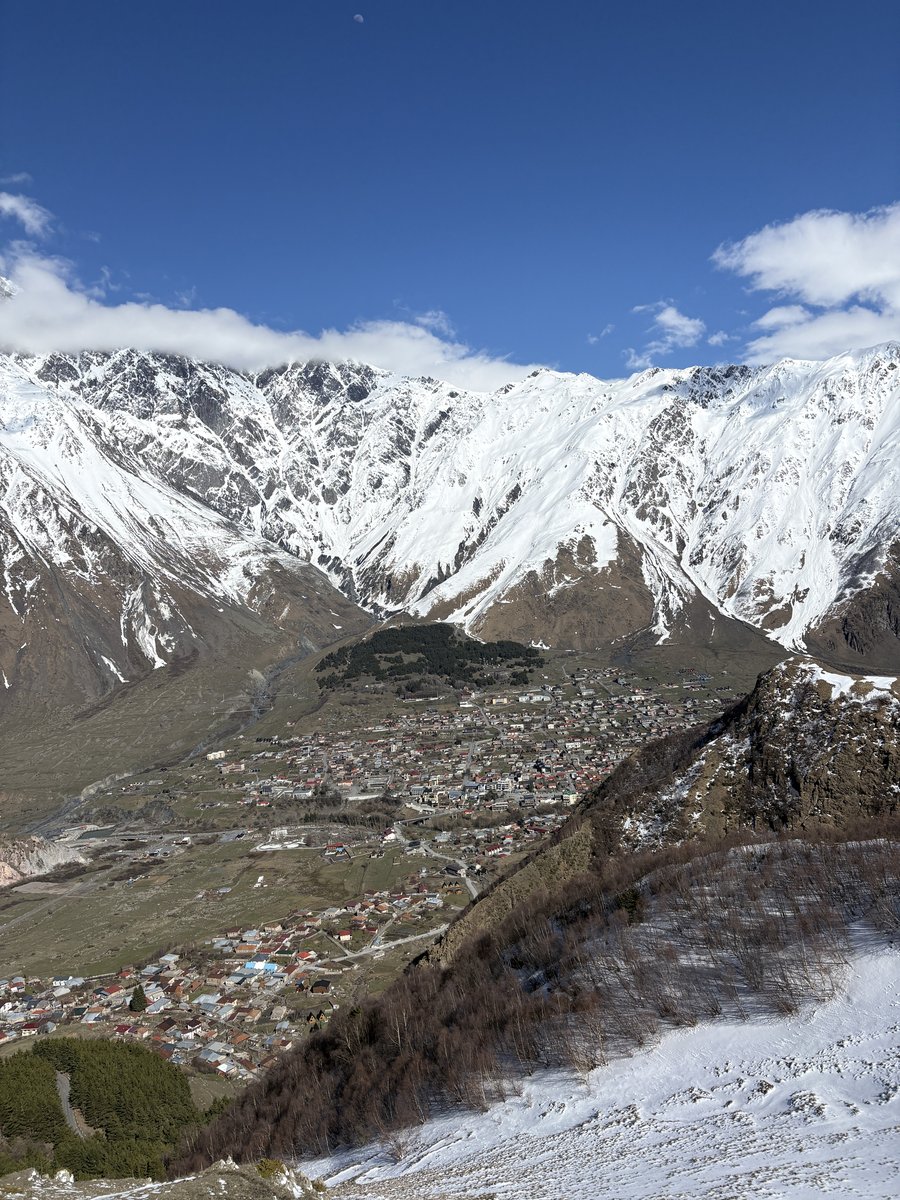
It was a great experience to see and feel Georgian Christian culture firsthand.
Comments
Loading...