Ohrid
Ohrid
Tirana to Ohrid
My next destination was Ohrid in North Macedonia, and to put my conclusion up front, it turned out to be the best place I'd been to on this trip so far. Ohrid is a city located on the shores of Lake Ohrid, one of the oldest lakes in Europe.
Lake Ohrid is one of the oldest and deepest lakes in Europe, straddling the border between North Macedonia and Albania at an altitude of around 700 meters. Estimated to be between 1.4 and 3 million years old, it has been called a "living museum" — its isolated, oxygen-rich depths shelter more than 200 endemic species found nowhere else, including the famous Ohrid trout. The lakeside town of Ohrid is known as the "Jerusalem of the Balkans," once said to have 365 churches (one for every day of the year), and it played a pivotal role in Slavic Christianity through Saints Clement and Naum, who established one of the first Slavic centers of learning here in the 9th century. Together with the surrounding region, the lake was inscribed as a UNESCO mixed natural-and-cultural World Heritage Site in 1979 — one of only a handful of such sites in the world.
I headed to Ohrid from Tirana, and it took around three hours by minivan. Some bus companies sell tickets online, and mine was about 15€. By the way, this bus company was really nice — they looked after us with safe driving and a friendly smile. We reached the border after about two hours and went through immigration; the process was simple — a staff member came onto the bus, I handed over my passport and waited about five minutes. Weekends could probably be busier.


Once we cleared immigration, Lake Ohrid came into view, and we arrived at the bus terminal — about a 30-minute walk from the center.
My hostel was near the lake, and the room had a lake view — honestly the best view I'd had on this trip. I regret only staying three nights; I seriously considered extending my schedule.
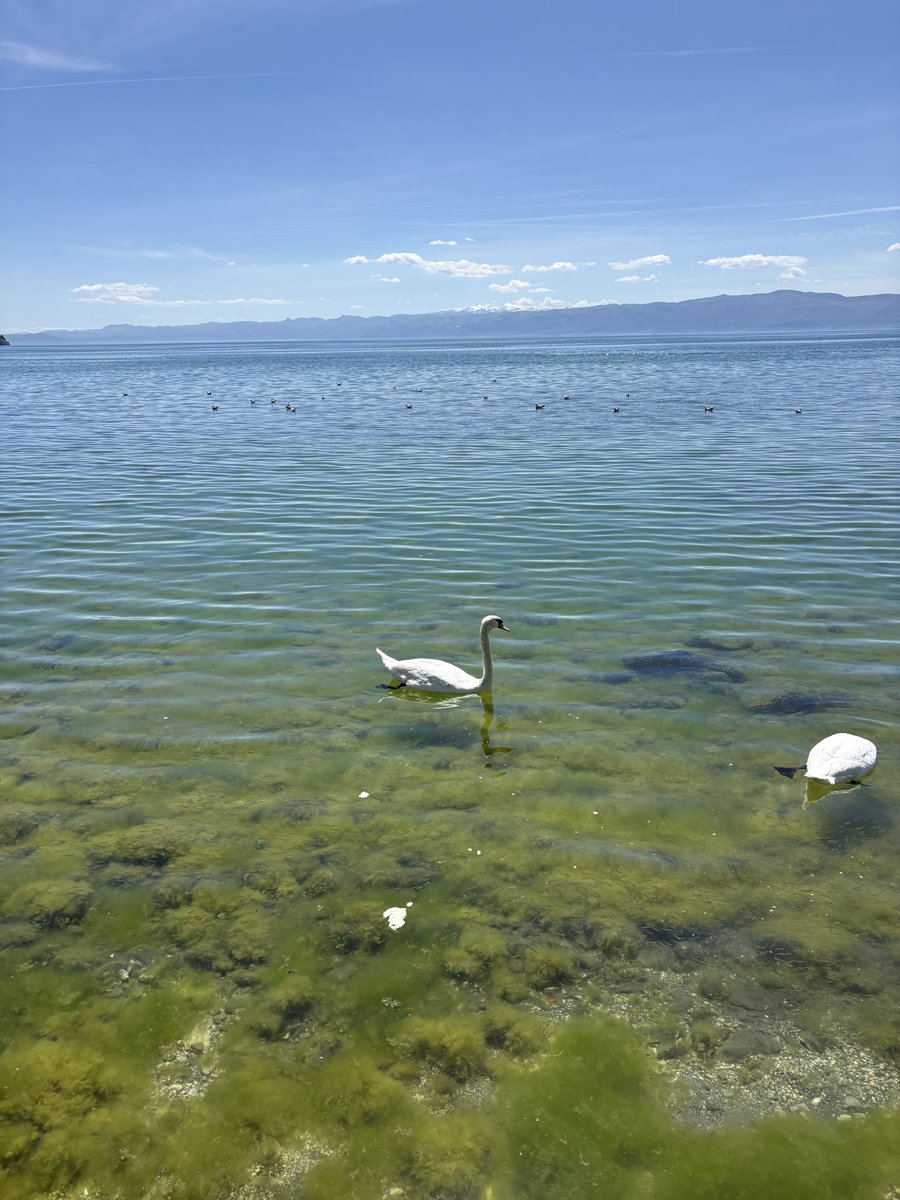
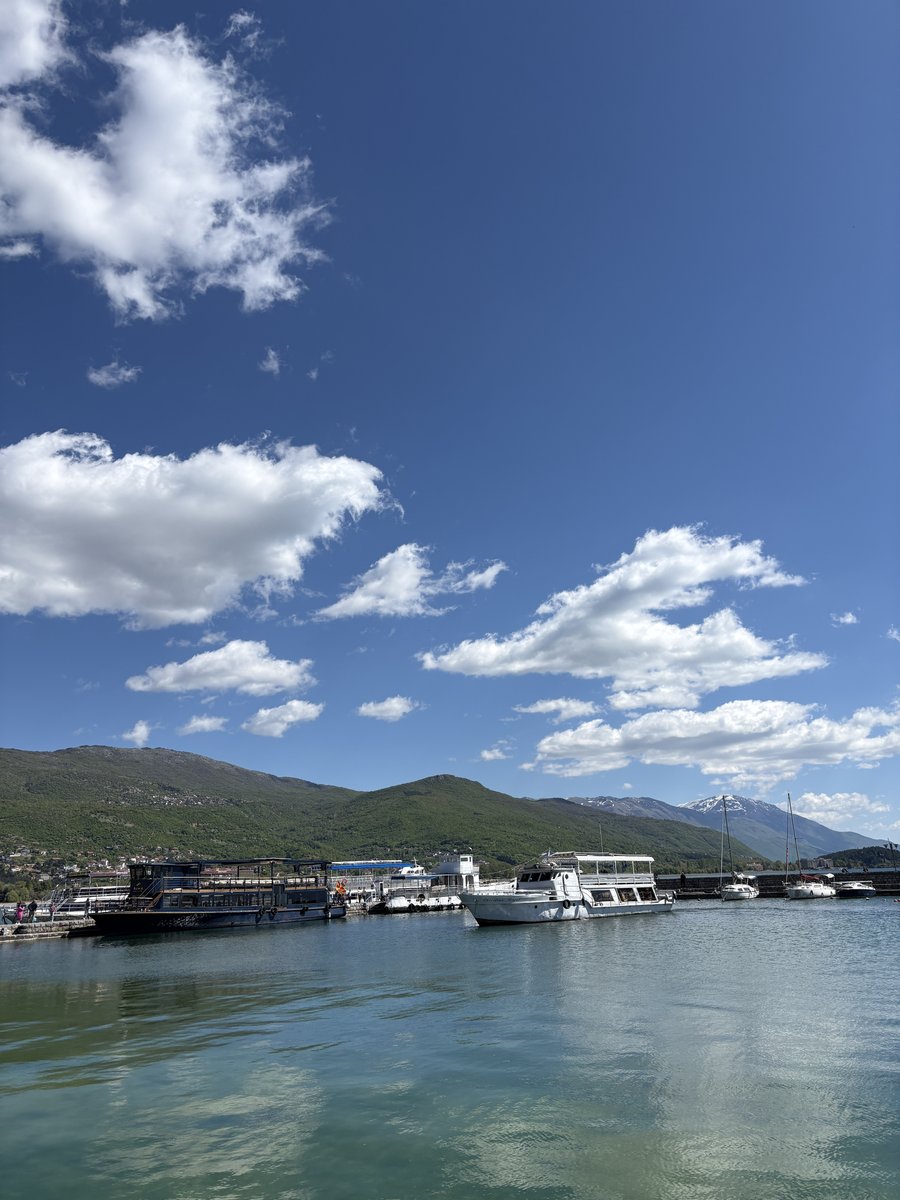
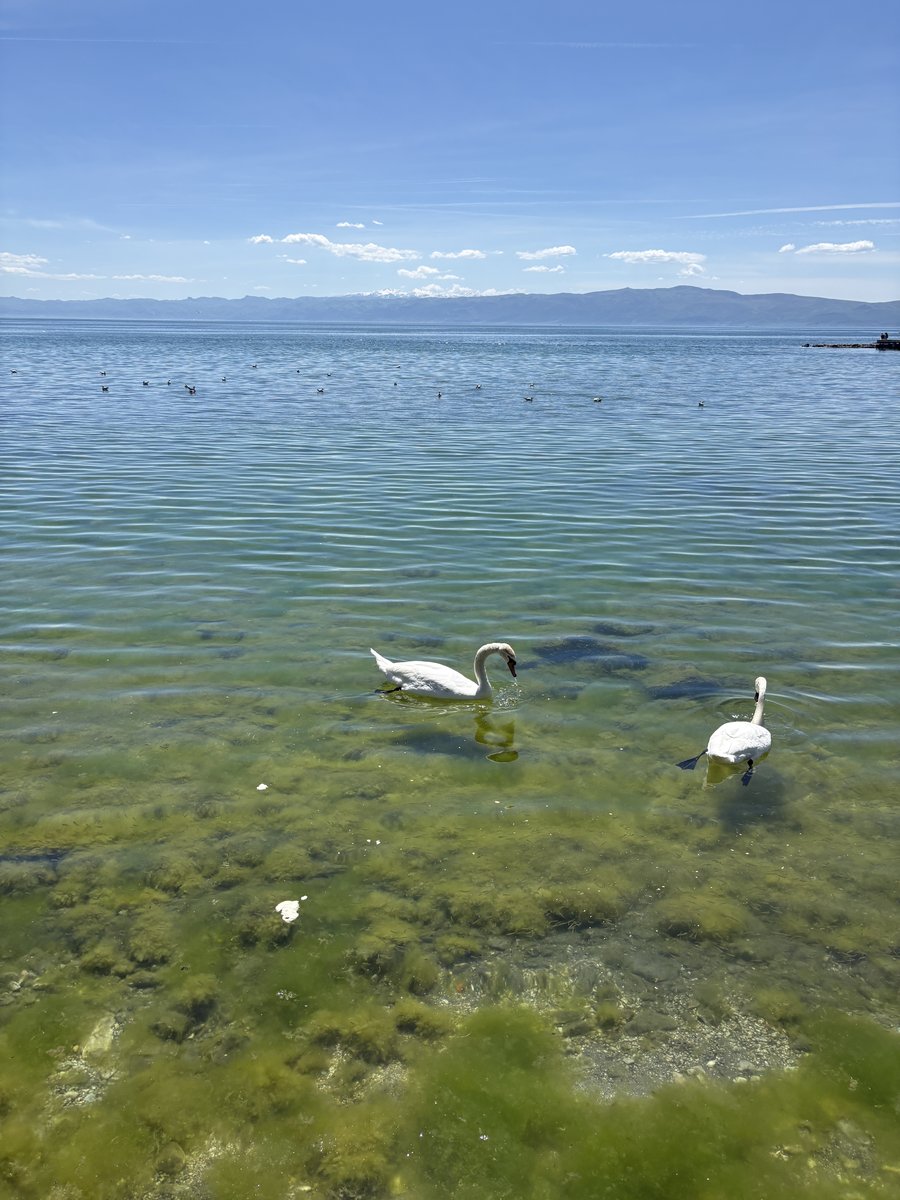
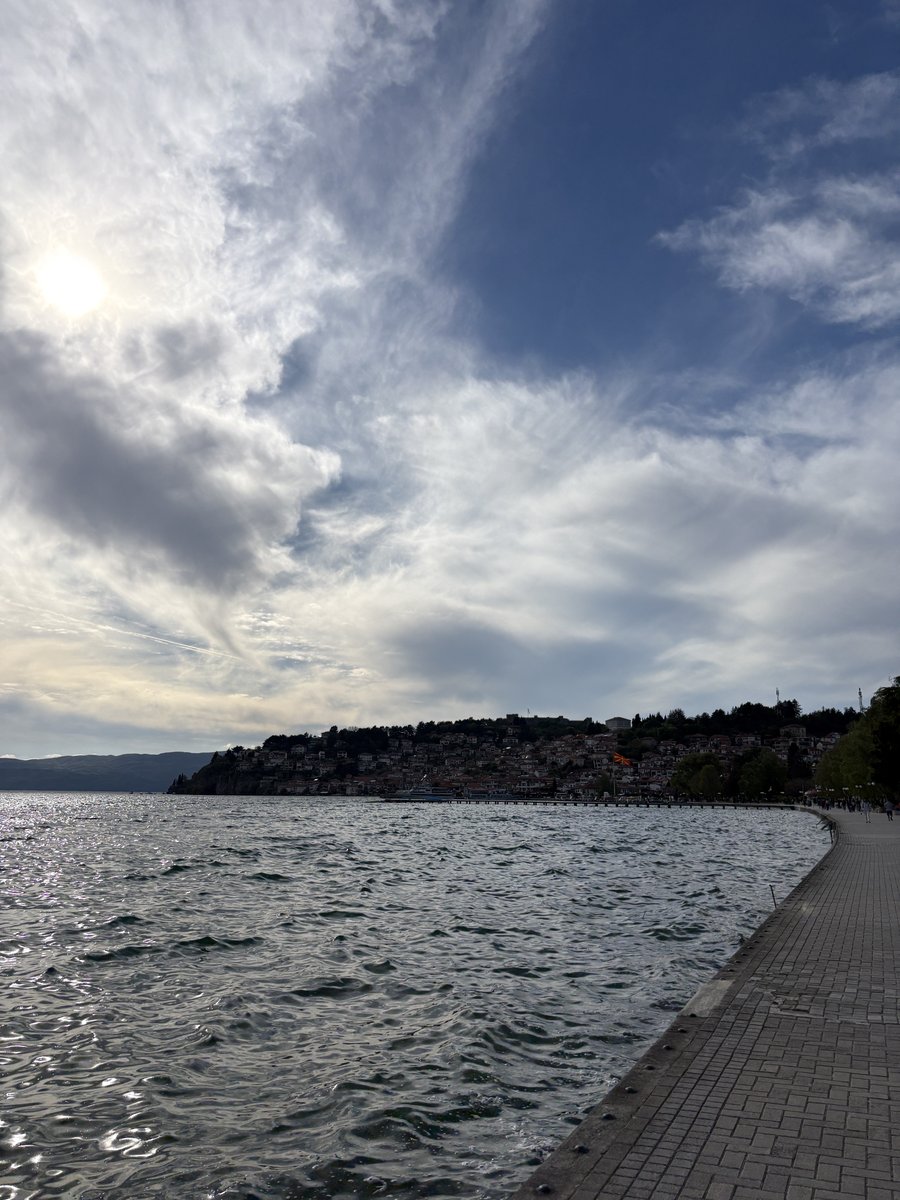
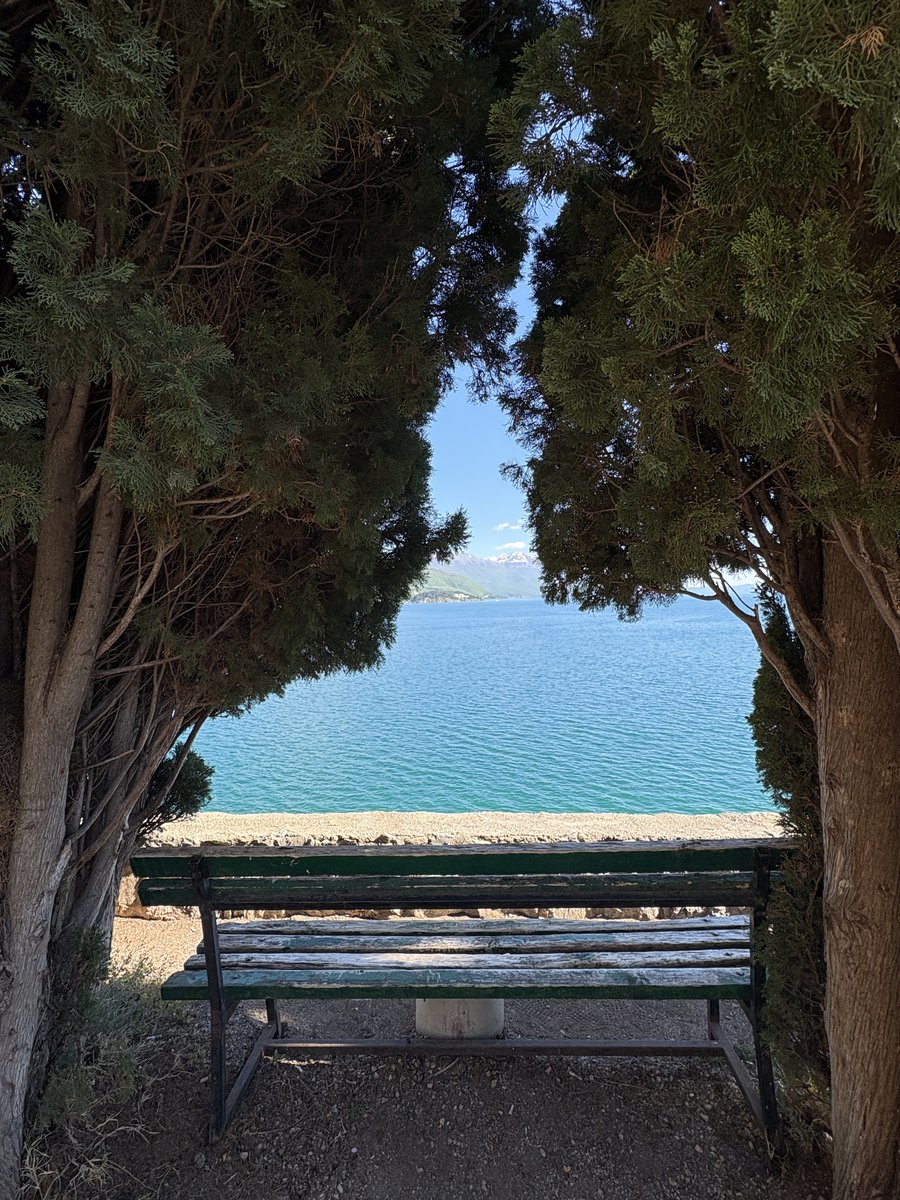
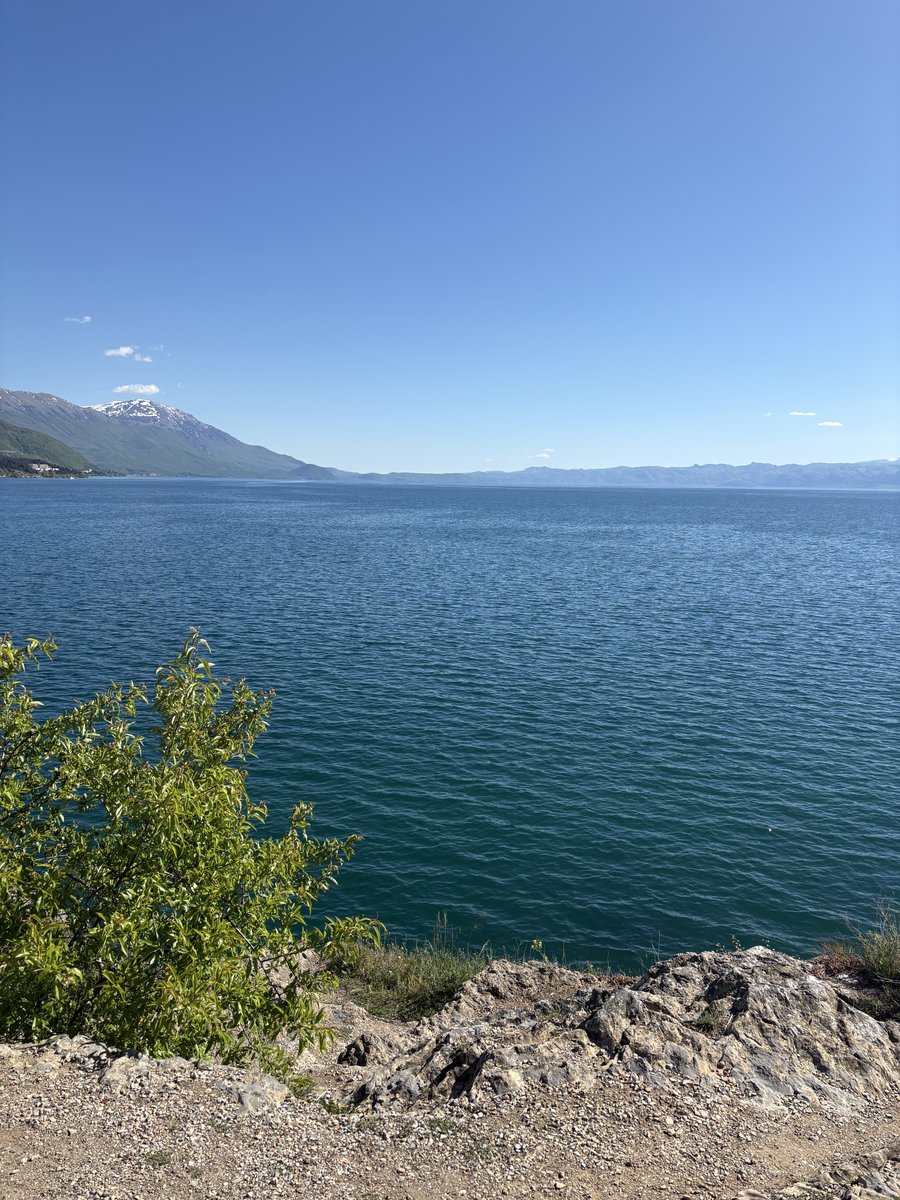
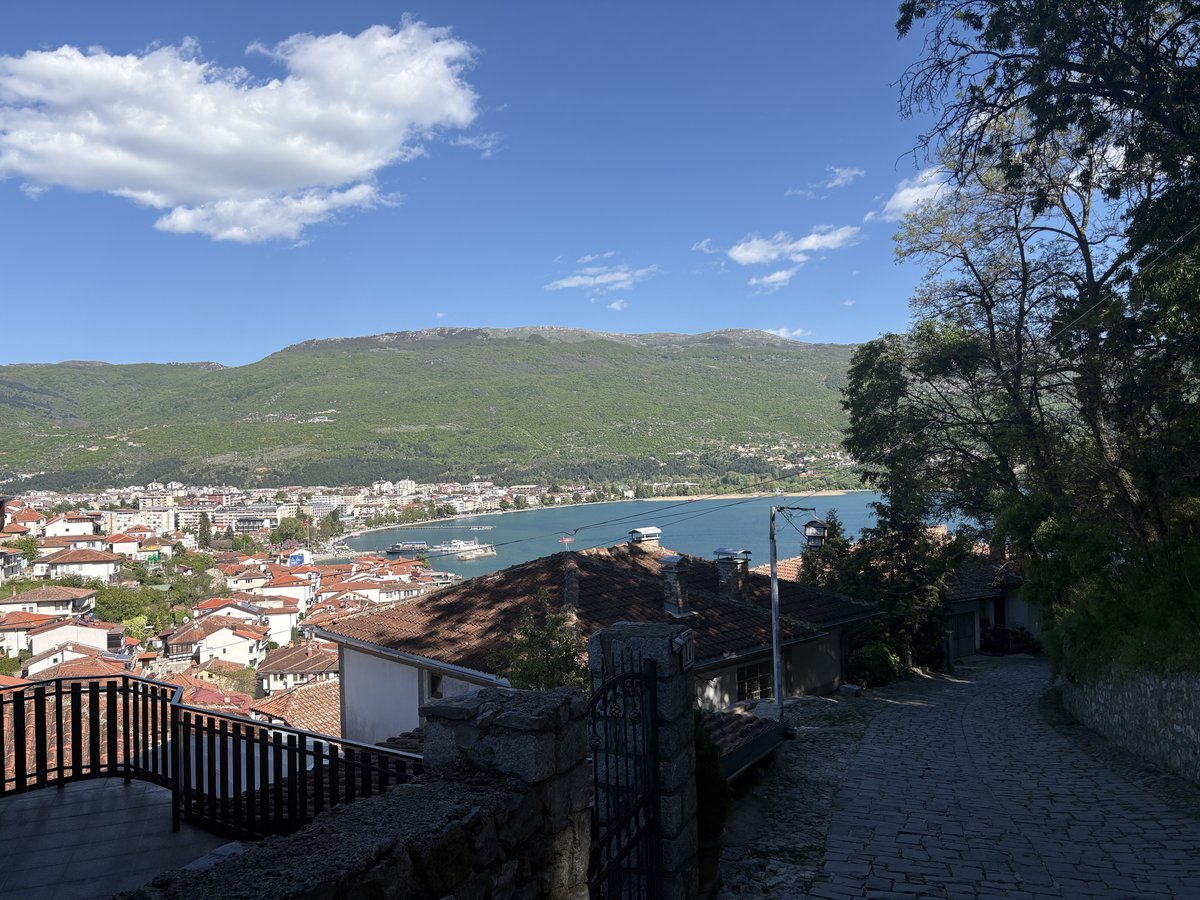
Here are some pictures I took around the lake.
Old churches around Ohrid
As mentioned above, Ohrid has many churches around the lake. I visited three of them this time, and the churches here felt similar to what I saw in Kazakhstan — Orthodox churches with gorgeous iconography and richly decorated interiors.
The Church of St. Panteleimon at Plaošnik in Ohrid was founded in 893 AD by Saint Clement of Ohrid, a disciple of Saints Cyril and Methodius and one of the most important figures in early Slavic Christianity. Clement established a monastery and what is often called the first Slavic university here, where roughly 3,500 disciples were trained in the new Cyrillic and Glagolitic scripts and went on to spread literacy across the Slavic world. The original church was demolished after the Ottoman conquest and replaced with the Imaret Mosque, but in 2002 it was reconstructed on its excavated foundations — and Saint Clement's tomb, found intact within the walls, once again lies at its heart. Perched on the Plaošnik plateau with sweeping views over Lake Ohrid, it remains one of the holiest sites in Macedonian Orthodoxy and a foundational landmark of Slavic Christianity.
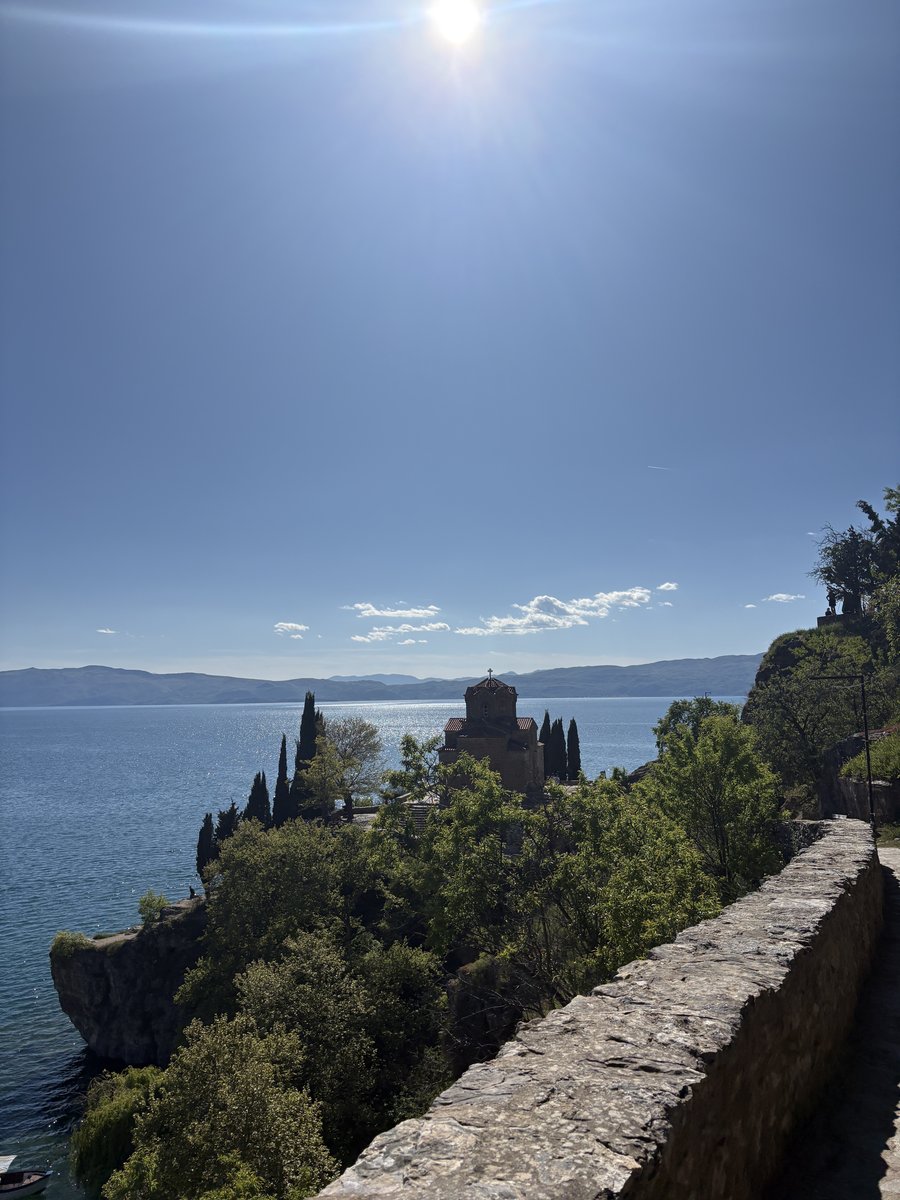
In particular, the Church of St. John at Kaneo sits right beside a cliff and offers an amazing view.
The Church of St. John at Kaneo is a small 13th-century Macedonian Orthodox church perched dramatically on a cliff above Lake Ohrid, in the Kaneo neighborhood of the old town. Dedicated to John of Patmos — the apostle traditionally credited with writing the Book of Revelation — it is built in a cross-in-square plan with a central dome, blending Byzantine and Armenian influences in its rough-hewn stone and brickwork. Though modest in size, its setting against the deep blue of the lake and the Galičica mountains has made it the most iconic image of Ohrid, appearing on virtually every postcard from the region. It remains an active place of worship, and the cliffs around it are a favorite spot for watching the sun set over the lake.
I also visited this church to see the original walls that have been preserved here.
St. Sophia Cathedral (Hagia Sophia) in Ohrid is an 11th-century Byzantine cathedral built around 1040 under Archbishop Leo, when Ohrid was the seat of one of the most important archbishoprics in the Byzantine world. Converted into a mosque after the Ottoman conquest and only restored in the 20th century, it preserves one of the finest collections of medieval Byzantine frescoes in Europe — many ironically saved by the Ottoman whitewash that covered them for centuries. Today it stands as part of the Ohrid UNESCO World Heritage Site and as one of the spiritual cornerstones of Macedonian Orthodoxy.
I had truly wonderful moments in Ohrid. The town still feels underrated, but I love this place — I'll definitely be back!
Comments
Loading...